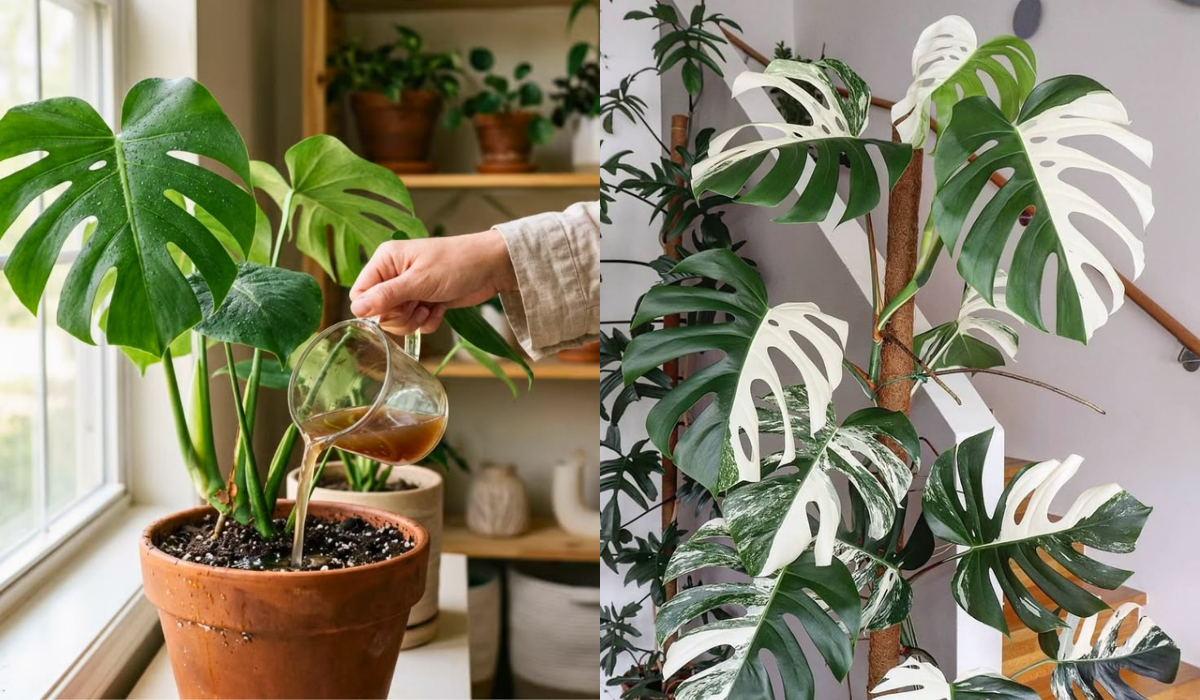
Monstera plant care tips become much easier once you understand how this tropical plant naturally grows. From my experience, Monsteras thrive in bright, indirect sunlight and prefer deep watering only after most of the soil has dried out. I have found that a chunky, well-draining soil mix and a sturdy moss pole help the plant grow larger, healthier leaves indoors. Regularly wiping dust from the foliage also keeps the leaves shiny and supports better light absorption..
I have personally grown Monstera plants for several years, and honestly, they taught me patience. In the beginning, I made common mistakes like overwatering, placing the plant in direct afternoon sunlight, and using heavy soil that stayed wet for too long. My Monstera developed yellow leaves, brown edges, and slow growth during those early months, I learned how important light, drainage, and humidity are for healthy growth. This article shares my real experience caring for Monsteras.
IN THIS ARTICLE
About this Monstera Plant
The Monstera is a tropical evergreen plant native to rainforests. It is widely grown as an indoor ornamental plant because of its unique leaf shape and low-maintenance nature.
| Category | Details |
|---|---|
| Botanical name | Monstera deliciosa |
| Common name | Swiss Cheese Plant |
| Plant type | Tropical evergreen vine |
| Mature size | 6–10 feet indoors |
| Flowering season | Spring to summer in tropical climates |
| Native region | Central America |
| Indoor/outdoor use | Mainly indoor, outdoor in warm climates |
Monsteras are beginner-friendly plants that can live for many years with proper care. Their climbing growth habit also makes them ideal for moss poles or decorative supports.
Benefits of Monstera Plant
A Monstera does more than decorate your home. It brings a tropical feel indoors while improving the overall atmosphere of a room.
- Large decorative leaves make interiors look modern and elegant.
- Helps create a relaxing indoor environment with lush greenery.
- Can improve indoor air freshness when grown in ventilated spaces.
- Easy to grow compared to many tropical houseplants.
- Adapts well to apartments and small homes.
One reason I enjoy growing Monstera is that it gives a “jungle vibe” without demanding constant attention. Even beginners can grow a healthy plant with a few simple care habits.
Monstera Plant Sunlight Requirements
Monsteras like bright, indirect sunlight. In their natural habitat, they grow under tall rainforest trees where sunlight is filtered through the canopy. Too much harsh sunlight can scorch the leaves, while very low light slows down growth and prevents leaf splitting.
- Place the plant near an east-facing or bright north-facing window.
- Filter strong sunlight with a curtain if using a south-facing window.
- Avoid direct afternoon sun, especially in hot climates.
- Rotate the plant every few weeks for even growth.
- Low light may cause smaller leaves and leggy stems.
I noticed my Monstera grew much faster after moving it closer to a bright window. The leaves became larger and healthier within a few months.
Monstera Plant Water Requirements
Monsteras prefer a “soak and dry” watering routine. The soil should dry slightly between waterings to prevent root rot. Overwatering is one of the biggest mistakes beginners make.
- Water when the top 2–3 inches of soil feel dry.
- Usually water every 7–10 days, depending on climate.
- Reduce watering during winter when growth slows.
- Always use pots with drainage holes.
- Empty excess water from saucers after watering.
I once watered my Monstera too frequently because I thought tropical plants needed constantly moist soil. Instead, the leaves turned yellow and the roots started rotting. Letting the soil dry slightly solved the problem.
Best Soil for Monstera Plant
The best soil for Monstera should be chunky, nutrient-rich, and well-draining. These plants dislike compact soil that traps water around the roots for too long.
- Use a mix containing potting soil, perlite, and orchid bark.
- Coco peat helps retain light moisture without waterlogging.
- Good aeration prevents fungal root problems.
- Avoid heavy garden soil indoors.
- Repot every 1–2 years if roots become crowded.
- A slightly acidic soil works best for healthy growth.
After changing to a chunky soil mix, my Monstera’s growth improved noticeably. The roots stayed healthier, and the leaves became more vibrant green.
Best Temperature and Humidity for Monstera Plant
Monsteras thrive in warm and humid conditions similar to tropical forests. They grow best when temperatures remain stable throughout the year.
- Ideal temperature range is 18°C–30°C (65°F–86°F).
- Protect the plant from cold drafts and sudden temperature drops.
- Keep away from air conditioners or heaters.
- Moderate to high humidity encourages larger leaves.
- Mist the leaves occasionally in dry climates.
I noticed brown leaf edges during very dry weather. Increasing humidity around the plant helped prevent further damage and improved leaf appearance.
Best Fertilizer for Monstera Plant
Monsteras benefit from regular feeding during active growth seasons. A balanced fertilizer helps produce large, healthy leaves with rich green color.
- Use a balanced liquid fertilizer every 2–3 weeks in spring and summer.
- Fertilizers with an N-P-K ratio of 3-1-2 or 3-1-3 work well.
- Reduce feeding during autumn and winter.
- Never fertilize dry soil to avoid root burn.
- Organic compost can improve soil nutrients naturally.
- Yellow leaves may sometimes indicate nutrient deficiency.
I prefer using diluted liquid fertilizer because it is easy to control. Overfertilizing once caused salt buildup in my pot, which damaged the roots slightly.
Common Problems and Solutions
- Yellow leaves: Usually caused by overwatering. Let the soil dry before watering again.
- Brown leaf edges: Often due to low humidity or underwatering. Increase moisture around the plant.
- Small leaves without splits: The plant may not be getting enough light.
- Root rot: Happens in soggy soil. Use well-draining soil and avoid standing water.
- Pest problems: Spider mites and mealybugs can appear indoors. Wipe leaves regularly and use neem oil if needed.
- Drooping stems: Can happen from poor watering habits or lack of support. Use a moss pole for stability.
FAQ – Monstera plant care tips
How often should I water a Monstera plant?
Water your Monstera when the top few inches of soil feel dry. In most homes, this means watering every 7–10 days, but temperature and humidity can change this schedule
Why are my Monstera leaves turning yellow?
Yellow leaves are commonly caused by overwatering. Check the soil moisture and ensure the pot has proper drainage holes.
Can Monstera grow in low light?
Monsteras can survive in low light, but growth becomes slower and leaves may stay small without natural splits. Bright indirect light gives the best results.
Do Monsteras need humidity?
Yes, Monsteras enjoy moderate to high humidity. Dry indoor air can cause brown leaf edges and slower growth.
Conclusion
Learning proper Monstera plant care completely changed the way my plant grew indoors. Once I understood its need for bright indirect light, well-draining soil, and careful watering, the plant became healthier and more vibrant. Monsteras are excellent plants for beginners because they are forgiving and visually rewarding. Avoid common mistakes like overwatering and direct harsh sunlight, and your plant can thrive for many years. With consistent care,
