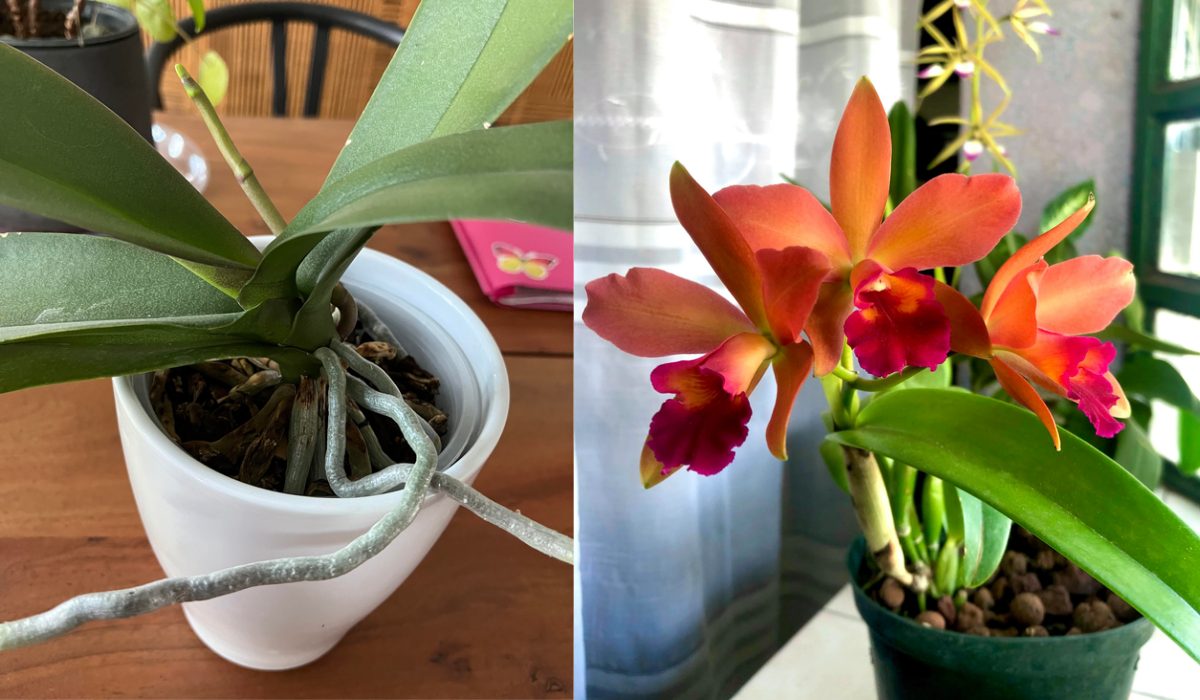
Orchid plant care becomes easy when you understand what the plant naturally needs. Most orchids do not die because they are difficult plants. In my experience, they usually suffer from overwatering, poor light, or the wrong potting mix. Once I started treating orchids differently from normal houseplants, they became one of the easiest flowering plants in my indoor garden.
I have grown orchids both indoors and on a shaded balcony for years, and one thing I noticed is that orchids respond slowly. They may take time to show new growth, but if the environment is right, they reward you with long-lasting flowers and healthy roots. Many beginners think orchids are delicate, but they are actually very adaptable when basic care is consistent.
About Orchid Plants
Orchid plants are popular because of their elegant flowers and long blooming period. There are thousands of orchid varieties, but the most common indoor orchid is the Phalaenopsis orchid, also called the moth orchid.
Unlike regular soil plants, orchids are epiphytes in nature. This means many orchids grow attached to trees where their roots receive air circulation and moisture from the environment. That is why normal garden soil usually damages orchid roots.
Quick Orchid Care Tips – orchid care instructions
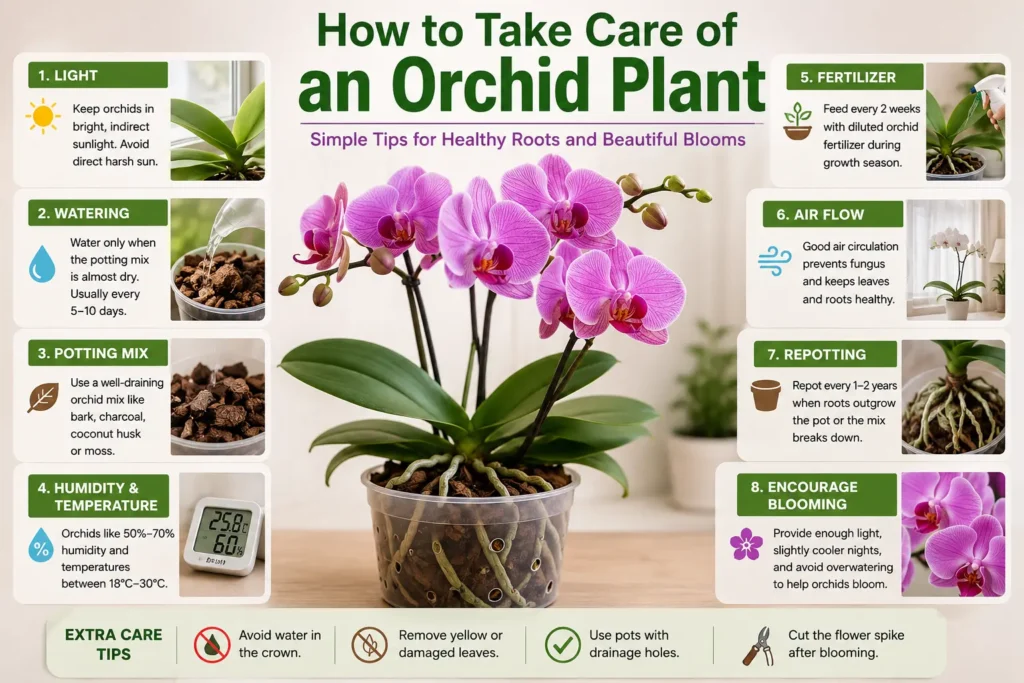
- Keep orchids in bright indirect sunlight
- Water only when the potting mix feels dry
- Use a well-draining orchid bark mix
- Maintain moderate humidity around the plant
- Avoid keeping water trapped in the crown
- Feed with diluted orchid fertilizer during growth season
- Use pots with drainage holes for healthy roots
Best Light for Orchid Plants
Light is one of the most important parts of orchid care. In my experience, orchids grow best near an east-facing window where they receive soft morning sunlight. Too much harsh afternoon sun can burn the leaves, while very low light reduces flowering.
A healthy orchid leaf should look medium green. Very dark green leaves often mean the plant needs more light.
Indoor Orchid Light Tips
- Place the plant near a bright window
- Avoid direct hot summer sunlight
- Use sheer curtains if sunlight is too strong
- Rotate the pot every few weeks for even growth
If your orchid is not blooming, insufficient light is often the reason.
How Often to Water an Orchid
One of the biggest mistakes beginners make is overwatering orchids. Orchid roots need airflow along with moisture. Wet roots without oxygen start rotting very quickly.
In my home garden, I usually water orchids once every 5 to 10 days depending on weather conditions. During winter, watering becomes less frequent.
Easy Watering Method
- Check the potting mix with your finger
- Water only when it feels almost dry
- Let excess water drain completely
- Never leave the pot sitting in water
Transparent orchid pots are very useful because you can monitor root health easily. Healthy roots usually appear green or silvery white.
Best Soil for Orchids
Orchids should not be planted in heavy soil. A loose orchid mix helps roots breathe properly.
I personally prefer using:
- Orchid bark
- Coconut husk chips
- Charcoal pieces
- Perlite or sphagnum moss
This combination drains fast while still holding enough moisture.
If the potting mix starts smelling bad or stays wet for too long, it is time to repot the orchid.
Temperature and Humidity for Orchids
Most indoor orchids prefer temperatures between 18°C to 30°C. They enjoy warm days and slightly cooler nights.
Humidity is also important, especially in dry indoor environments. I noticed my orchids grow healthier when humidity stays around 50% to 70%.
Ways to Increase Humidity
- Place a water tray near the plant
- Group plants together
- Use a room humidifier
- Mist lightly around the plant in dry weather
Avoid excessive misting directly into the flower crown because trapped moisture may cause fungal problems.
Best Fertilizer for Orchid Plants
Orchids are light feeders compared to many flowering plants. Too much fertilizer can damage roots and reduce blooms.
I usually feed my orchids once every two weeks during active growth using diluted orchid fertilizer.
Simple Fertilizing Rule
Many orchid growers follow this method:
“Weakly, weekly.”
This means using a weak fertilizer solution regularly instead of a strong dose occasionally.
Balanced fertilizers like 20-20-20 work well when diluted properly.
How to Make Orchids Bloom Again
After flowering ends, many people think the orchid is dying. Actually, the plant is simply entering a resting stage.
To encourage reblooming:
- Provide enough indirect light
- Reduce overwatering
- Give slightly cooler night temperatures
- Continue light fertilizing
Sometimes orchids need a few months before blooming again. Patience is important.
In my experience, healthy roots and good light matter more than expensive fertilizers.
Common Orchid Problems
Yellow Leaves
Possible causes:
- Overwatering
- Too much direct sunlight
- Root rot
Wrinkled Leaves
Usually caused by dehydration or damaged roots.
Orchid Not Blooming
Most common reasons:
- Low light
- Excess nitrogen fertilizer
- Sudden temperature changes
Root Rot
This happens when roots stay wet for long periods. Remove damaged roots and repot in fresh orchid mix.
Should You Repot an Orchid?
Yes, orchids benefit from repotting every 1 to 2 years because the bark mix slowly breaks down.
Signs your orchid needs repotting:
- Roots growing outside excessively
- Potting mix becoming compact
- Bad smell from roots
- Water staying wet for too long
Always use a slightly larger pot with drainage holes.
Conclusion
Learning how to take care of an orchid plant becomes much easier once you understand its natural growing habits. Orchids prefer airflow around roots, indirect sunlight, controlled watering, and patience. In my experience, keeping things simple works better than over-managing the plant.
If you maintain proper light, avoid overwatering, and use a good orchid bark mix, your orchid can stay healthy and bloom beautifully for many years indoors.
How long do orchid flowers last?
Most orchid blooms last 6–12 weeks.
Why is my orchid not blooming?
Your orchid may not bloom because of low light, overwatering, poor humidity, wrong fertilizer use, or sudden temperature changes indoors.
When should I repot an orchid?
Repot an orchid every 1–2 years when roots outgrow the pot, bark breaks down, or drainage becomes poor and unhealthy.
What should you not do with an orchid?
What Should You Not Do With an Orchid?Avoid overwatering, placing it in direct harsh sunlight, using heavy garden soil, or letting water sit around the roots. Orchids prefer bright indirect light, good airflow, and well-draining orchid mix. Following these simple orchid care tips helps keep your plant healthy and blooming longer.
How to Grow Lucky Bamboo at Home – Step by Step Guide
How to Take Care of Jade Plant Indoors | Complete Jade Plant Care Guide
