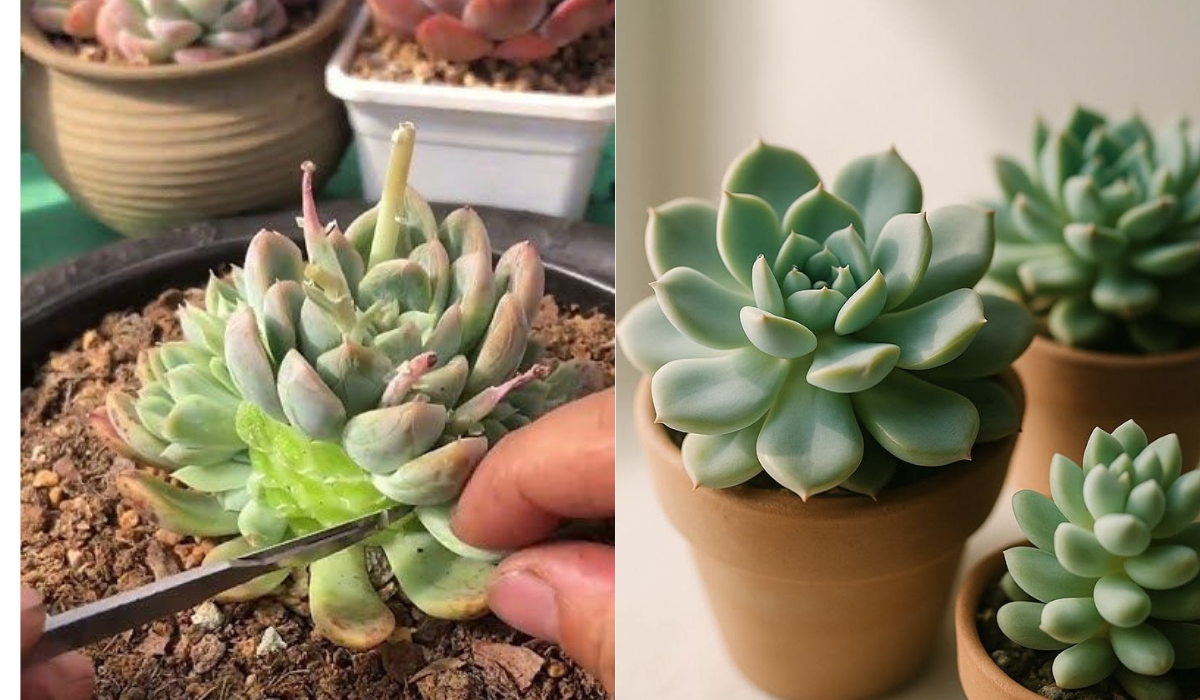
Succulent plant care tips start with giving the plant plenty of bright sunlight, well-draining soil, and occasional deep watering instead of watering every day. Succulents are beautiful low-maintenance plants known for their thick fleshy leaves that store water naturally. People love growing succulents because they are stylish, beginner-friendly, drought tolerant, and suitable for both indoor and outdoor gardening.
I have personally grown succulents in pots, balcony gardens, terrace spaces, and indoor windows for many years. In the beginning, I made common mistakes like watering too frequently, using heavy garden soil, and placing plants in dark corners of the house. Because of these mistakes, some of my succulents developed yellow leaves, root rot, weak stretched growth, and fungal problems. After experimenting with different soil mixes, sunlight conditions, watering schedules, and fertilizers, In this article, I am sharing practical and beginner-friendly tips that helped my succulents become healthy, colorful, and long-lasting.
IN THIS ARTICLE
About this Succulent Plant
Succulents are drought-tolerant plants that store water in their leaves, stems, or roots. They naturally grow in dry climates and survive with minimal watering, which makes them ideal for busy plant lovers.
| Category | Details |
|---|---|
| Botanical name | Various genera including Aloe, Echeveria, Haworthia, Sedum, Crassula |
| Common name | Succulent Plant |
| Plant type | Drought-tolerant fleshy plant |
| Mature size | 2 inches to 3 feet depending on variety |
| Flowering season | Spring and summer |
| Native region | Africa, Central America, South America |
| Indoor/outdoor use | Suitable for both indoor and outdoor gardening |
Succulents are excellent decorative plants because they require less maintenance and grow well in containers, tabletops, balconies, and small spaces.
Benefits of Succulent Plant
Succulents are popular around the world because they are easy to grow and highly decorative. They are perfect for beginners who want beautiful plants without spending too much time on maintenance.
- Require less watering compared to tropical plants
- Easy to maintain for beginners
- Improve indoor and outdoor decoration
- Available in many unique shapes and colors
- Suitable for desks, balconies, and apartments
- Adapt well to dry weather conditions
Another great benefit is that succulents can survive for many years with proper care and minimal attention.
Succulent Plant Sunlight Requirements
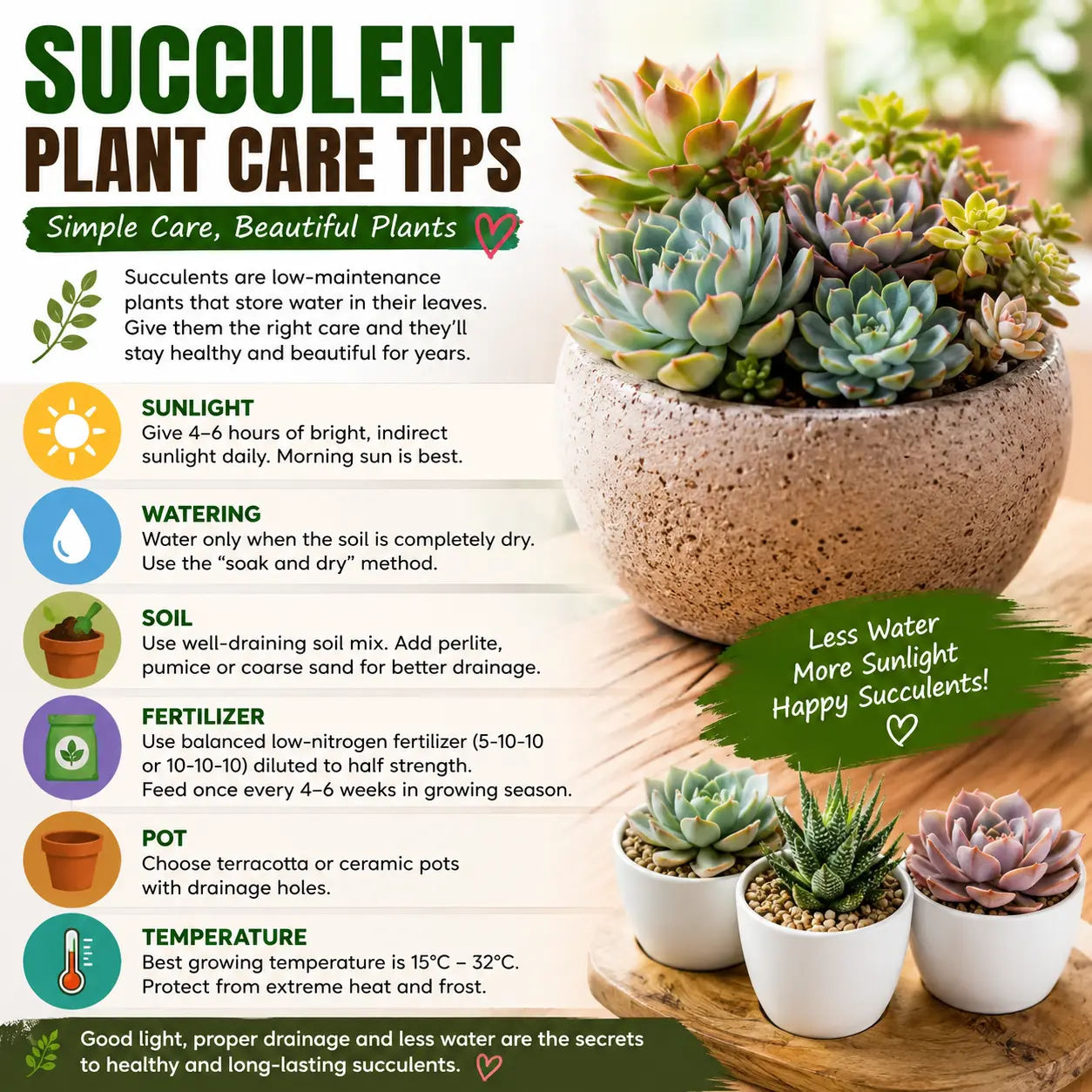
Proper lighting is one of the most important parts of healthy succulent plant care. Most succulents grow best in bright locations where they receive enough natural light every day. In my experience, succulents kept in dark rooms become pale, weak, and stretched toward the nearest light source. A bright balcony, sunny window, or terrace works best for healthy growth. However, very harsh afternoon sunlight during extreme summer heat can burn sensitive succulent leaves.
- Keep succulents in a place receiving 4 to 6 hours of bright indirect or filtered sunlight
- East-facing windows are excellent for indoor succulents
- Rotate pots every few weeks for even growth
- Gradually introduce plants to stronger sunlight
- Stretching growth usually means insufficient light
- Protect sensitive varieties from extreme afternoon heat
Healthy sunlight exposure keeps succulent leaves compact, colorful, and strong.
Succulent Plant Water Requirements
Watering succulents correctly is extremely important because overwatering is the biggest reason these plants die. Succulents naturally store moisture in their leaves, so they do not need daily watering. I learned this lesson after losing several plants to root rot caused by constantly wet soil. The best method is to water deeply and then allow the soil to dry completely before watering again. This encourages healthy root growth and prevents fungal diseases.
- Follow a deep watering method instead of light daily watering
- Water only when the soil becomes fully dry
- Allow excess water to drain completely from the pot
- Reduce watering during winter and rainy weather
- Wrinkled leaves can indicate underwatering
- Soft mushy leaves usually mean overwatering
A proper watering routine is the foundation of successful succulent growing.
Best Soil for Succulent Plant
Succulents need loose and airy soil that drains water quickly. Heavy soil holds moisture for too long and increases the risk of root rot. From my personal gardening experience, succulents grow best in gritty soil mixtures that contain inorganic materials for better airflow and drainage. Cocopeat can still be used, but it should always be mixed heavily with materials like coarse sand, perlite, pumice, or gravel to prevent waterlogging.
- Use a fast-draining cactus or succulent soil mix
- Add perlite, pumice, gravel, or coarse sand
- Avoid dense clay-based garden soil
- Keep the soil airy and loose
- Soil should dry within a few days after watering
- Repot plants if the soil remains wet too long
Healthy roots depend on proper drainage, and good soil prevents most succulent problems.
Best Temperature and Humidity for Succulent Plant
Most succulents prefer warm temperatures and low humidity conditions. They grow actively during mild weather and may slow down or become dormant during extreme heat or freezing cold. In my experience, indoor succulents suffer when kept in humid rooms with poor airflow. Good air circulation helps prevent fungal infections and keeps the leaves healthy.
- Keep succulents in moderate warm temperatures
- Protect plants from frost and freezing winds
- Avoid placing pots near heaters or AC vents
- Ensure proper airflow around the plant
- Low humidity conditions are ideal
- Growth may slow during extreme summer heat
Stable temperatures and dry air help succulents remain healthy throughout the year.
Best Fertilizer for Succulent Plant
Succulents do not require heavy feeding because they naturally grow in nutrient-poor conditions. Too much fertilizer often causes soft, weak growth. I usually fertilize my succulents only during spring and summer when the plants are actively growing. A balanced, low-nitrogen, water-soluble liquid fertilizer works best for healthy roots and compact growth. Fertilizers with an N-P-K ratio like 5-10-10 or 10-10-10 are excellent choices for succulents. Always dilute the fertilizer to half strength before applying because succulents are sensitive to strong feeding.
- Use a balanced low-nitrogen liquid fertilizer
- Fertilizers like 5-10-10 or 10-10-10 work well
- Always dilute fertilizer to half strength
- Feed once every 4 to 6 weeks during active growth
- Avoid fertilizing during winter dormancy
- Overfertilizing can damage roots and leaves
Light feeding combined with proper sunlight encourages healthier and more colorful succulent growth.
Best Pot for Succulent Plant
Choosing the right pot is equally important for successful succulent care. In my experience, breathable pots dry faster and reduce the chances of root rot. Containers made from porous materials help extra moisture evaporate naturally. Drainage holes are absolutely necessary because standing water can quickly damage succulent roots.
- Use breathable clay-based or porous ceramic containers
- Always choose pots with drainage holes
- Avoid oversized containers that hold excess moisture
- Shallow pots work well for many succulent varieties
- Repot when roots become overcrowded
- Clean pots reduce fungal and bacterial issues
The right pot helps maintain the perfect balance between moisture retention and airflow.
Common Problems and Solutions
- Yellow leaves: Usually caused by overwatering. Let the soil dry fully before watering again.
- Leggy stretched growth: Happens because of insufficient sunlight. Move the plant to a brighter location.
- Root rot: Caused by soggy soil and poor drainage. Repot immediately in dry well-draining soil.
- Brown burnt spots: Often caused by sudden harsh sunlight exposure.
- Mealybugs: Remove pests using cotton dipped in rubbing alcohol.
- Soft mushy stems: Usually indicate fungal problems caused by excess moisture.
FAQ for Succulent plant care tips
How often should I water a succulent plant?
Water only when the soil becomes completely dry. Depending on weather conditions, this may be every 1 to 2 weeks.
Can succulents grow indoors?
Yes, succulents grow very well indoors if they receive enough bright sunlight from windows or balconies.
Why are my succulent leaves turning yellow?
Yellow leaves are usually caused by excessive watering or poor drainage conditions.
What is the best fertilizer for succulents?
A balanced low-nitrogen liquid fertilizer such as 5-10-10 or 10-10-10 diluted to half strength works bes
Conclusion
Succulents are among the easiest and most rewarding plants to grow once you understand their basic needs. Proper succulent plant care mainly depends on bright sunlight, fast-draining soil, moderate watering, and good airflow. From my gardening experience, keeping succulent care simple always gives better results. Provide enough light, avoid excess moisture, and choose breathable pots for healthier roots and stronger growth.
