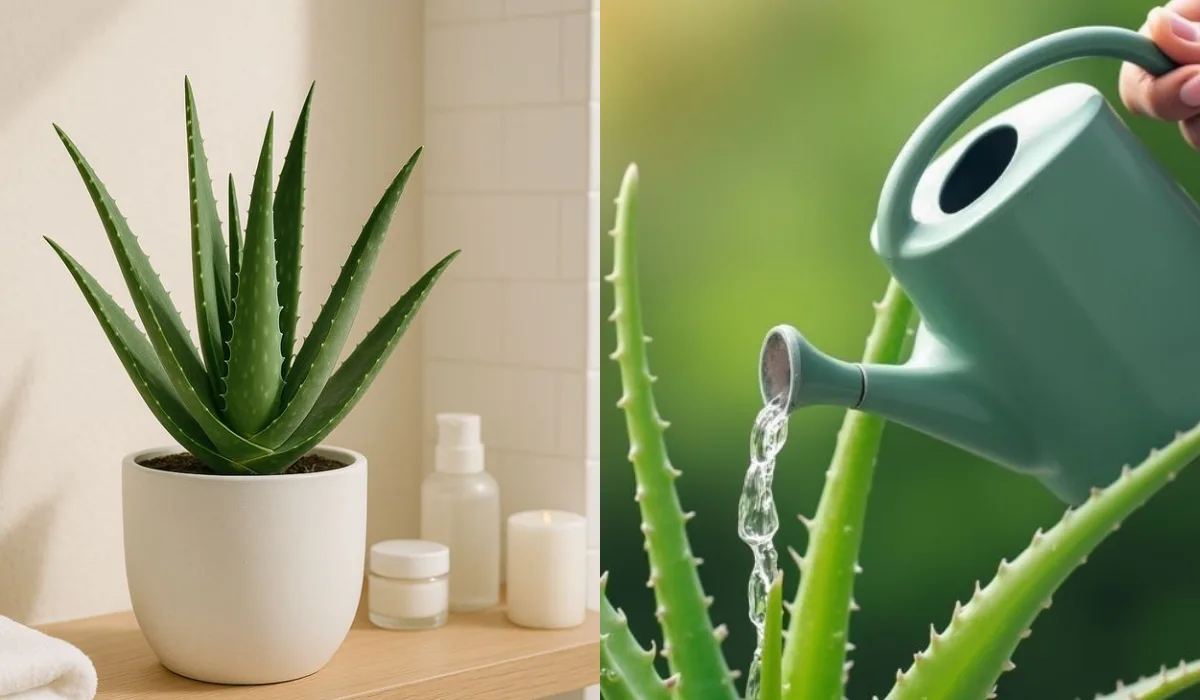
Aloe Vera Care Instructions: Place your Aloe Vera in bright, indirect sunlight, water only when the soil is completely dry, use well-draining succulent soil, and grow it in a pot with drainage holes. Avoid overwatering and protect it from frost for healthy growth.
I’ve been growing aloe vera plants for several years, both indoors and outdoors, and I’ve learned that keeping them healthy is all about following a simple routine. In this guide, I’ll share my practical experience and easy care tips to help you grow a strong, healthy aloe vera plant that thrives for years.
IN THIS ARTICLE
About this Aloe Vera Plant
Aloe vera is one of the most popular succulent plants in the world. It is loved for its medicinal uses, drought tolerance, and easy care routine. This plant grows well in pots, balconies, patios, and even sunny indoor windows.
| Category | Details |
|---|---|
| Botanical Name | Aloe barbadensis miller |
| Common Name | Aloe Vera |
| Plant Type | Succulent |
| Mature Size | 1–2 feet tall and wide |
| Flowering Season | Spring to Summer |
| Native Region | Arabian Peninsula |
| Indoor/Outdoor Use | Both indoor and outdoor |
This plant is ideal for beginner gardeners because it survives with minimal attention. With proper care, aloe vera can live for many years in the same container.
Benefits of Aloe Vera Plant
The aloe vera plant is not only decorative but also highly useful in daily life. Many gardeners keep at least one aloe vera plant at home because of its practical benefits.
- The gel inside the leaves is commonly used for soothing minor burns and dry skin.
- Aloe vera is a low-maintenance plant suitable for beginners.
- It can survive drought conditions due to water-storing leaves.
- The plant improves the beauty of indoor and outdoor spaces.
- Aloe vera grows well in containers and small apartments.
- It is a long-lasting plant that can stay healthy for years with proper care.
Because of these benefits, aloe vera remains one of the best plants for busy plant lovers and first-time gardeners.
Aloe Vera Plant Sunlight Requirements
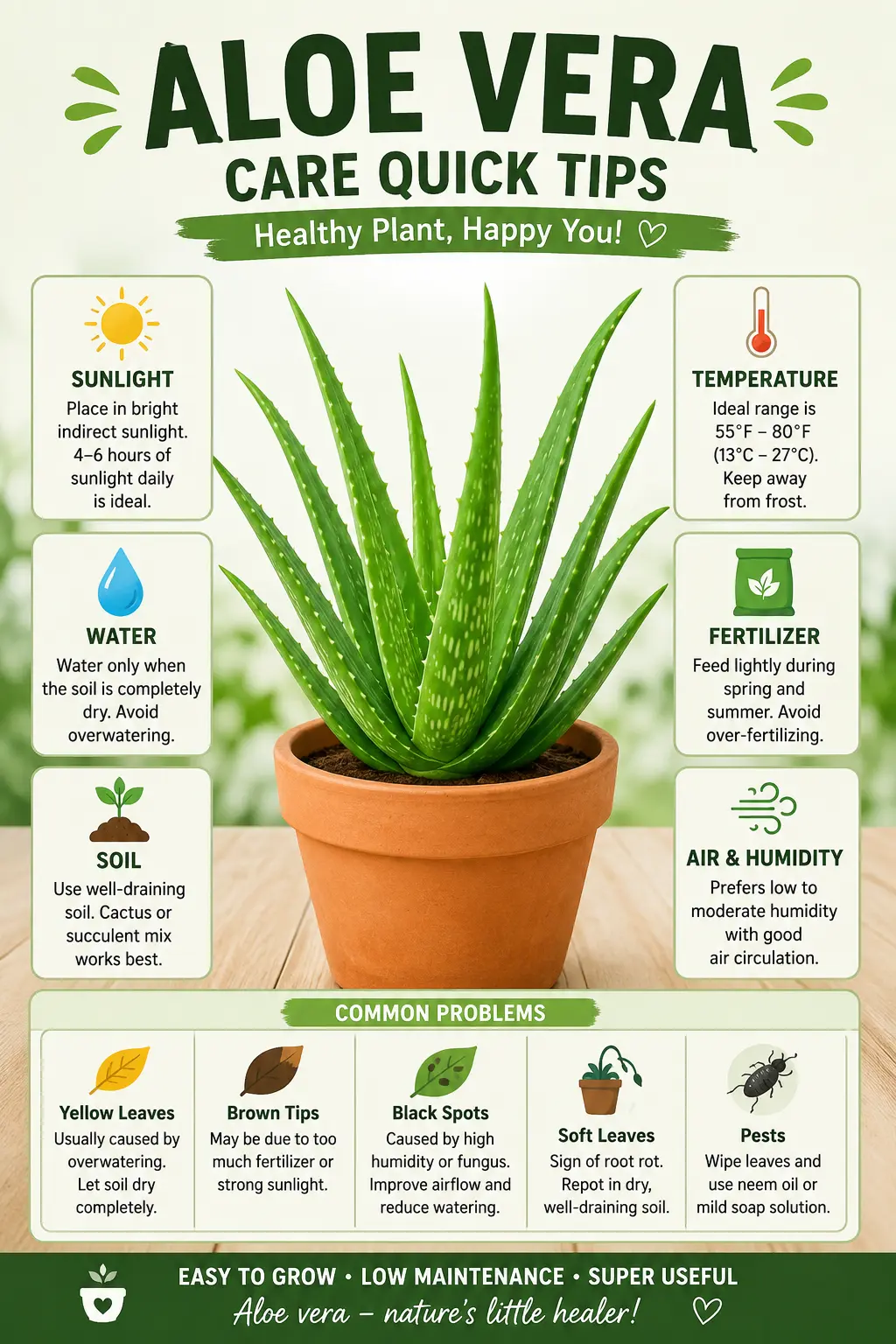
Proper light is one of the most important parts of aloe vera plant care. In my experience, aloe vera grows best when it receives plenty of bright sunlight daily. Plants kept in dark corners often become weak and pale. Outdoor aloe vera plants usually grow faster and stronger compared to indoor ones.
- Place aloe vera in bright indirect or direct sunlight.
- Give at least 5–6 hours of sunlight daily.
- A south-facing window works best indoors.
- Slowly introduce outdoor plants to strong afternoon sun.
- Rotate indoor pots every few weeks for even growth.
- Avoid keeping the plant in full shade for long periods.
I noticed that my aloe vera became thicker and greener after moving it near a sunny balcony window.
Aloe Vera Plant Water Requirements
Overwatering is the most common mistake people make with aloe vera care. Since aloe vera is a succulent, it stores water inside its leaves and does not need frequent watering. I once watered my plant every two days, and the roots quickly started rotting.
- Water only when the soil becomes completely dry.
- Reduce watering during winter months.
- Always check soil moisture before watering again.
- Use pots with drainage holes to prevent water buildup.
- Avoid leaving water standing in saucers.
- Water deeply but less frequently.
In hot summer weather, I usually water my aloe vera once every 7–10 days, while winter watering becomes much less frequent.
Best Soil for Aloe Vera Plant
Choosing the correct soil is essential for healthy aloe vera roots. Heavy soil holds too much moisture, which can damage the plant. I learned this lesson after planting aloe vera in normal garden soil that stayed wet for many days.
- Use well-draining succulent or cactus soil mix.
- Add sand or perlite for better drainage.
- Avoid compact clay-heavy soil.
- Use terracotta pots for improved airflow.
- Keep the soil loose and airy.
- Replace old compacted soil every few years.
After switching to cactus mix soil, my aloe vera roots became much healthier and leaf growth improved noticeably.
Best Temperature and Humidity for Aloe Vera Plant
Aloe vera plants prefer warm and dry conditions. They naturally grow in desert-like environments, so too much humidity can create problems. During rainy seasons, I always move my potted aloe vera to a dry covered location.
- Ideal temperature range is 55°F to 80°F (13°C to 27°C).
- Protect the plant from frost and freezing temperatures.
- Avoid placing the plant near cold air conditioners.
- Keep humidity levels low to moderate.
- Ensure proper airflow around the plant.
- Bring outdoor plants inside during extreme cold weather.
Aloe vera handles heat much better than cold. In my garden, the plant thrives during warm sunny months with little extra care.
Best Fertilizer for Aloe Vera Plant
Aloe vera does not need heavy feeding. In fact, too much fertilizer can damage the plant. I made this mistake once by using strong fertilizer too often, which caused brown leaf tips.
- Use balanced succulent fertilizer once or twice yearly.
- Fertilize during spring or summer only.
- Avoid fertilizing newly repotted plants immediately.
- Dilute liquid fertilizer before use.
- Organic compost can be added lightly.
- Never overfeed the plant.
I usually apply a light dose of cactus fertilizer during spring, and that is enough for healthy growth throughout the season.
Common Problems and Solutions
- Yellow leaves: Usually caused by overwatering. Let the soil dry fully before watering again.
- Soft mushy stem: Root rot due to poor drainage. Repot into dry cactus soil immediately.
- Brown leaf tips: Too much fertilizer or intense sudden sunlight exposure.
- Stretching leaves: Not enough sunlight. Move the plant to a brighter location.
- Black spots on leaves: High humidity or fungal problems. Improve airflow and reduce watering.
- Pests like mealybugs: Clean leaves with diluted neem oil or mild soap solution.
Most aloe vera problems are connected to excess moisture, so careful watering solves many issues naturally.
FAQ – Aloe vera plant care
How often should I water aloe vera?
Water aloe vera only when the soil becomes completely dry. In most climates, watering every 1–2 weeks is enough depending on temperature and humidity.
Can aloe vera grow indoors?
Yes, aloe vera grows very well indoors if it receives enough bright sunlight. Place it near a sunny window for best results.
Why are my aloe vera leaves turning yellow?
Yellow leaves are commonly caused by overwatering, poor drainage, or lack of sunlight. Check the soil condition and light exposure immediately.
Does aloe vera need direct sunlight?
Aloe vera prefers bright light and can tolerate direct sunlight. However, sudden intense afternoon sun may scorch indoor-grown plants if not adjusted gradually
What is the best pot for aloe vera?
Terracotta pots are excellent for aloe vera because they allow excess moisture to evaporate quickly and improve airflow around the roots.
Conclusion
Growing aloe vera has been one of the easiest and most rewarding experiences in my gardening journey. This plant survives well in many climates and needs very little maintenance once established. The key to successful aloe vera plant care is providing enough sunlight, well-draining soil, and avoiding overwatering. Most beginner problems happen because people treat aloe vera like a regular houseplant instead of a succulent. With proper care, aloe vera can stay healthy, green, and beautiful for many years. My personal gardening tip is simple: when in doubt, water less rather than more.
