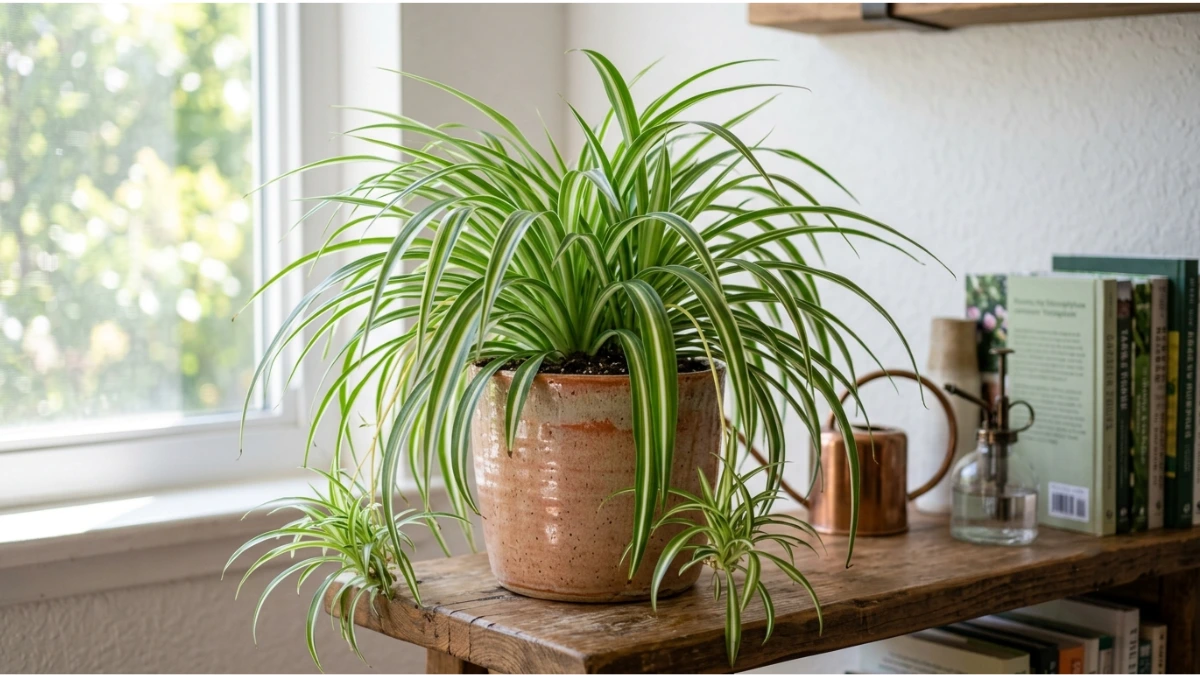
One of the reasons I love growing spider plants is that they don’t demand much attention, yet they can completely brighten up a room with their long, arching leaves. But when I brought my first spider plant home, I quickly realized that “easy to grow” didn’t mean “impossible to get wrong.” Within a few weeks, the leaf tips started turning brown, and I couldn’t figure out what I was doing wrong.
Quick Answer
Spider plants grow best in bright, indirect light, loose and well-draining soil, and moderate watering. Let the top inch of soil dry before watering again, avoid harsh afternoon sunlight, and feed the plant lightly during the growing season. With the right care, a healthy spider plant will produce lush green leaves and plenty of baby plantlets.
After spending time observing the plant, I discovered that most of the problems were caused by simple mistakes like watering too often, placing it in harsh afternoon sunlight, and leaving it in the same small pot for too long. Once I corrected those habits, the plant recovered, started producing healthy new leaves, and even rewarded me with baby spider plants.
In this guide, I’ll share the care routine that has worked best for me over the years, along with the beginner mistakes I learned to avoid. Whether you’re growing a spider plant indoors, on a balcony, or in your office, these simple tips will help you keep it healthy and thriving.
Table of Contents
About This Spider Plant
Spider plant is one of those houseplants that makes indoor gardening feel easy. It’s known for its long, arching green leaves with white or cream stripes and its ability to produce tiny baby plants, often called “spiderettes.” That’s one of the reasons it has remained a favorite among beginners and experienced plant lovers alike.
When I bought my first spider plant, I expected it to be just another decorative indoor plant. Over time, I realized it’s much more than that. It’s incredibly forgiving, adapts well to different indoor conditions, and usually bounces back quickly if you make a small mistake with watering or light.
| Feature | Details |
|---|---|
| Botanical Name | Chlorophytum comosum |
| Common Name | Spider Plant |
| Plant Type | Perennial houseplant |
| Mature Size | 12–24 inches (30–60 cm) |
| Native Region | South Africa |
| Flowering Season | Spring and Summer |
| Best Growing Location | Bright indoor spaces, balconies, or shaded patios |
| Pet Friendly | Yes, generally considered non-toxic to cats and dogs* |
Although spider plants are generally considered non-toxic, it’s still best to prevent pets from chewing on the leaves.
Why I Recommend Spider Plants to Beginners
If someone asks me to recommend just one indoor plant for a beginner, a spider plant would always be near the top of my list. It’s one of those plants that doesn’t get upset over every small mistake. Even if you occasionally forget to water it or miss a feeding, it usually recovers once you get back to a proper care routine.
Another reason I enjoy growing spider plants is how rewarding they become over time. A healthy plant not only produces fresh green leaves but also sends out long stems with tiny baby plants. Watching those little plantlets develop is one of the most satisfying parts of growing a spider plant, and they’re easy to propagate if you want more plants or would like to share them with friends and family.
Here are a few reasons why I think spider plants are perfect for beginners:
- They adapt well to most indoor environments.
- They don’t need frequent watering.
- They grow beautifully in pots, hanging baskets, and plant stands.
- Healthy plants produce baby spider plants that are easy to propagate.
- They recover quickly from minor care mistakes.
How Much Sunlight Does a Spider Plant Need?
One of the biggest lessons I learned while growing spider plants is that more sunlight doesn’t always mean better growth. When I first brought mine home, I placed it where it received direct afternoon sun for several hours each day. Within a couple of weeks, the leaf tips started turning brown, and some of the leaves looked faded instead of bright green.
After moving the plant to a spot with bright, indirect light, it gradually recovered and started producing healthier new leaves. Since then, that’s where I’ve kept every spider plant I’ve grown.
Spider plants grow best in bright, indirect sunlight for most of the day. A location near an east-facing window is usually ideal because it provides gentle morning sunlight without exposing the leaves to harsh afternoon heat. If you don’t have an east-facing window, any bright room with filtered light will work well.
While spider plants can survive in lower light conditions, don’t expect them to grow quickly or produce many baby plants. On the other hand, too much direct sunlight can scorch the leaves and cause brown tips or faded colors.
Quick Sunlight Tips
- Place your spider plant in bright, indirect light.
- Gentle morning sunlight is beneficial.
- Avoid strong afternoon sun, especially during summer.
- Rotate the pot every few weeks so all sides receive even light.
- If the leaves look pale or stretched, try moving the plant to a brighter location.
How Often Should You Water a Spider Plant?
If I had to name the biggest mistake I made with my first spider plant, it would be overwatering. I assumed indoor plants needed water every couple of days, so I followed a schedule instead of checking the soil. At first, everything looked fine, but after a while, the leaves started turning yellow, and the plant looked weak. When I finally removed it from the pot, I realized the roots had stayed wet for too long.
That experience completely changed the way I water spider plants. Instead of watering on fixed days, I simply check the soil with my finger. If the top inch (2–3 cm) feels dry, it’s time to water. If it’s still moist, I wait another day or two.
Spider plants store water in their thick, fleshy roots, which means they can handle short dry periods much better than constantly wet soil. Letting the soil dry slightly between waterings helps keep the roots healthy and reduces the risk of root rot.
Simple Watering Tips
- Water only when the top inch of soil feels dry.
- Water thoroughly until excess water drains from the bottom of the pot.
- Never let the pot sit in standing water.
- Reduce watering during winter, as the soil dries more slowly.
- Always use a pot with drainage holes.
Best Soil for a Spider Plant
I didn’t pay much attention to soil when I bought my first spider plant. Like many beginners, I assumed any potting soil would do the job. The plant survived, but it didn’t grow as well as I expected. The soil stayed wet for too long after watering, and I eventually realized that healthy roots need both moisture and air.
After switching to a lighter, well-draining potting mix, I noticed a clear difference. The soil dried more evenly, the roots stayed healthier, and the plant started producing fresh leaves much more consistently.
Spider plants prefer a loose, well-draining soil that holds enough moisture without becoming soggy. A good-quality indoor potting mix works well, and adding a few simple ingredients can improve drainage even further.
A Simple Soil Mix That Works Well
- Use a good-quality indoor potting mix as the base.
- Mix in a little compost for slow-release nutrients.
- Add perlite or coarse sand to improve drainage.
- Avoid heavy garden soil, which can become compacted and hold too much water.
- Repot every 1–2 years if the soil becomes compacted or the roots outgrow the pot.
A healthy root system is the foundation of a healthy spider plant. When the soil drains well, you’ll usually notice stronger growth, greener leaves, and fewer watering problems.
Best Temperature and Humidity for a Spider Plant
One thing I’ve noticed over the years is that spider plants aren’t very fussy about temperature. Mine has grown happily indoors through most of the year as long as it wasn’t exposed to extreme heat or cold. The healthiest growth usually appears during spring and early summer when the temperature is warm but comfortable.
Spider plants grow best in temperatures between 65°F and 80°F (18°C–27°C). They can adapt to normal indoor conditions, but sudden temperature changes may stress the plant and cause brown leaf tips or slow growth.
Humidity isn’t a major concern, although very dry indoor air can sometimes cause the leaf tips to turn brown. If that happens, increasing humidity slightly or moving the plant away from heaters and air conditioners often helps.
Temperature and Humidity Tips
- Keep your spider plant between 65°F and 80°F (18°C–27°C) whenever possible.
- Protect it from frost and cold drafts.
- Avoid placing it directly beside heaters or air conditioners.
- Normal indoor humidity is usually enough.
- If the air is very dry, a pebble tray or humidifier can help reduce brown leaf tips.
Spider plants are quite adaptable, so you don’t need to create perfect conditions. As long as the environment is comfortable for you, it’s usually comfortable for your plant too.
Best Fertilizer for a Spider Plant
When I first started growing spider plants, I assumed feeding them more often would make them grow faster. Instead, I noticed the leaf tips beginning to turn brown while the plant wasn’t producing much new growth. That’s when I learned that spider plants are naturally light feeders and don’t need frequent fertilizing to stay healthy.
Now I keep things simple. During spring and summer, when the plant is actively growing, I feed it with a diluted balanced liquid fertilizer about once a month. In autumn and winter, I usually skip fertilizing because the plant grows much more slowly.
If you’ve mixed compost into the potting soil, your spider plant may need even less fertilizer. A little nutrition goes a long way, and overfeeding often causes more problems than underfeeding.
Simple Fertilizing Tips
- Feed once a month during the growing season (spring and summer).
- Use a balanced liquid fertilizer at half the recommended strength.
- Water the soil before or after fertilizing to protect the roots.
- Avoid fertilizing during winter when growth naturally slows.
- Don’t overfeed—too much fertilizer can lead to brown leaf tips and salt buildup in the soil.
A healthy spider plant doesn’t need heavy feeding. With the right light, watering, and soil, a small amount of fertilizer is usually enough to keep it growing strong.
Common Spider Plant Problems (and How I Fixed Them)
Even though spider plants are easy to care for, they can still develop problems if their basic needs aren’t met. Most of the issues I faced weren’t caused by diseases—they were the result of simple care mistakes. Once I learned to observe the plant instead of following a fixed routine, keeping it healthy became much easier.
Brown Leaf Tips
Brown tips are probably the most common problem with spider plants. I noticed this on my first plant after using tap water regularly and occasionally adding more fertilizer than necessary. After switching to filtered water whenever possible and feeding the plant less often, the new leaves looked much healthier.
Yellow Leaves
Yellow leaves are usually a sign of overwatering or poor drainage. If the soil stays wet for too long, the roots struggle to breathe. Let the soil dry slightly between waterings and always use a pot with drainage holes.
Slow Growth
If your spider plant isn’t producing many new leaves, check whether it’s getting enough light or if the roots have completely filled the pot. Repotting a root-bound plant and moving it to a brighter location often encourages fresh growth.
Mealybugs and Spider Mites
Although spider plants are generally trouble-free, pests like mealybugs and spider mites can occasionally appear, especially on stressed plants. Wipe the leaves with a damp cloth, remove visible insects, and use neem oil if the infestation becomes more serious.
The good news is that spider plants recover surprisingly well once the underlying problem is fixed. Healthy watering habits, bright indirect light, and good airflow can prevent most issues before they become serious.
Frequently Asked Questions
Is a spider plant easy to care for?
Yes. Spider plants are low-maintenance houseplants that adapt well to normal indoor conditions, making them an excellent choice for beginners.
How often should I water a spider plant?
Water only when the top 1 inch (2–3 cm) of soil feels dry. The exact frequency depends on the season, temperature, and light.
Why are my spider plant’s leaf tips turning brown?
Brown tips are usually caused by hard tap water, over-fertilizing, or very dry air. Adjusting these conditions helps prevent new brown tips.
Can a spider plant grow in low light?
Yes, but it will grow more slowly and produce fewer baby plants. Bright, indirect light gives the best results.
When should I repot my spider plant?
Repot when the roots become crowded or start growing through the drainage holes. This is usually needed every 1–2 years.
Final Thoughts
Spider plants have been one of the most rewarding houseplants I’ve grown. They’re forgiving, adapt well to indoor spaces, and don’t demand constant attention. Like many beginners, I made a few mistakes at first—watering too often, giving the plant too much direct sunlight, and waiting too long before repotting it. Once I understood what the plant actually needed, caring for it became much simpler.
If you’re just starting your indoor gardening journey, don’t worry about getting everything perfect. Pay attention to your plant, make small adjustments when needed, and you’ll learn what works best in your home. With the right balance of light, watering, and well-draining soil, a spider plant can stay healthy for years and even reward you with plenty of baby plants along the way.
You May Also Like
How to Take Care of an Orchid Plant
