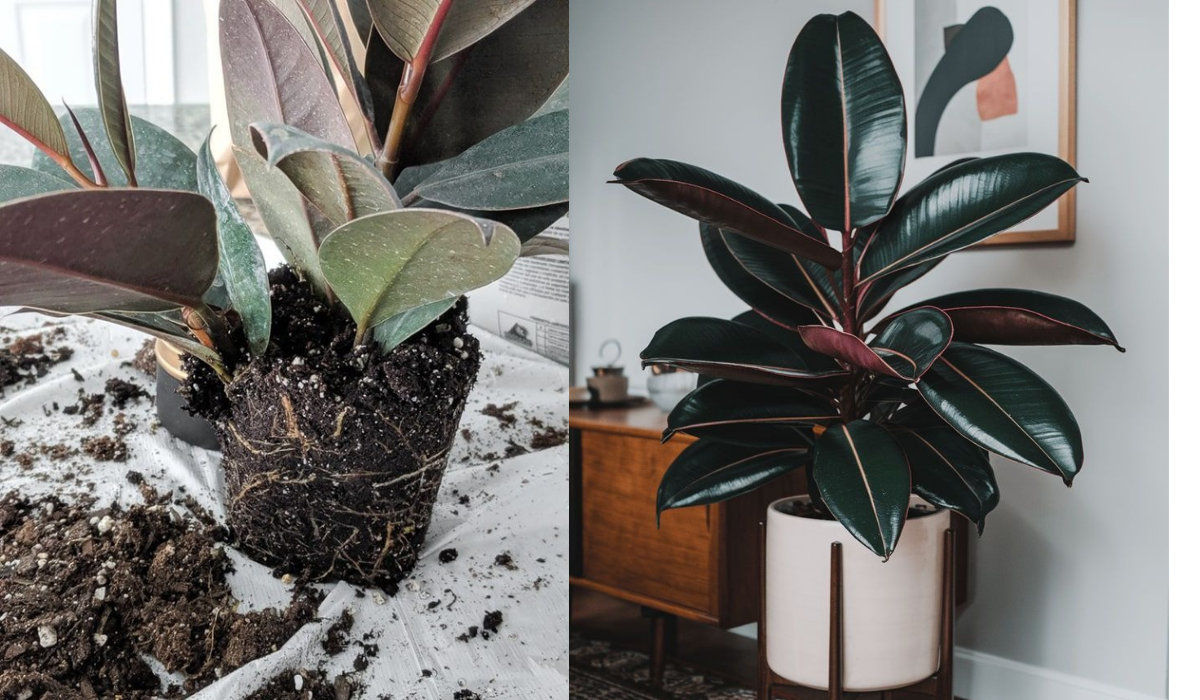
Rubber Plant care is simple when you provide bright filtered light, allow the growing medium to dry slightly between waterings, and use a rich, free-draining potting mix. With the right balance of light, moisture, and nutrition, this attractive houseplant can develop large glossy leaves and become a beautiful focal point in any home.
I have been growing Rubber Plants indoors for several years, and I learned many lessons through trial and error. In the beginning, I placed my plant in a dark corner and watered it too frequently, which slowed its growth. After changing its location and adjusting my watering routine, I noticed healthier leaves and stronger growth. In this guide, I am sharing my personal experience along with practical tips that have worked well for me.
IN THIS ARTICLE
About Rubber Plant
The Rubber Plant is a popular indoor foliage plant known for its thick stems and large, shiny leaves. It is easy to maintain, adapts well to indoor conditions, and can grow into an impressive statement plant when given proper care.
| Feature | Details |
|---|---|
| Botanical Name | Ficus elastica |
| Common Name | Rubber Plant, Rubber Tree |
| Plant Type | Evergreen Tropical Plant |
| Mature Size | 6–10 feet indoors, much taller outdoors |
| Flowering Season | Rarely flowers indoors |
| Native Region | South and Southeast Asia |
| Indoor/Outdoor Use | Mainly Indoor, Outdoor in Warm Climates |
Rubber Plants are widely grown because of their attractive appearance and relatively low maintenance requirements. Their glossy leaves can instantly enhance the look of a room.
Benefits of Rubber Plant
A Rubber Plant is more than just a decorative houseplant. It offers several benefits for indoor spaces and is suitable for both homes and offices.
- Creates a bold and elegant indoor display.
- Easy to grow for beginners.
- Produces large attractive leaves.
- Adapts well to indoor environments.
- Can grow into a long-lasting houseplant.
- Suitable for living rooms, offices, and bedrooms.
These qualities make the Rubber Plant one of the most popular indoor foliage plants worldwide.
Rubber Plant Sunlight Requirements
Understanding Rubber Plant sunlight requirements is important for healthy growth. In my experience, the plant performs best near a bright window where it receives plenty of indirect natural light. Insufficient light often causes slower growth and smaller leaves.
Direct afternoon sunlight can sometimes scorch the leaves, especially during hot summer months. A location with bright filtered light usually provides the best results.
- Place near a bright window.
- Provide indirect sunlight daily.
- Protect from harsh afternoon sun.
- Rotate the pot regularly for balanced growth.
- Avoid very dark corners.
- Variegated varieties need slightly more light.
Good lighting encourages larger leaves, stronger stems, and faster growth.
Rubber Plant Water Requirements
One of the most common mistakes I made was watering too frequently. Rubber Plants prefer soil that dries slightly between watering sessions rather than remaining constantly wet.
Always check the soil before watering. If the upper layer feels dry, it is usually time to water again.
- Water thoroughly when needed.
- Allow the top layer of soil to dry slightly.
- Reduce watering during winter.
- Avoid keeping soil constantly wet.
- Empty excess water from saucers.
- Adjust watering according to season and climate.
Following this routine helps prevent root problems and keeps the plant healthy.
Best Soil for Rubber Plant
The best soil for Rubber Plant should provide both moisture retention and excellent drainage. A heavy soil mixture can trap excess water around the roots and lead to health issues.
I have found that a loose, nutrient-rich potting mix works best for long-term growth.
- Use a well-draining indoor plant mix.
- Add perlite for improved drainage.
- Include organic compost for nutrients.
- Avoid compacted garden soil.
- Ensure proper airflow around roots.
- Refresh old soil when repotting.
Healthy soil encourages vigorous root growth and supports larger foliage.
Best Temperature and Humidity for Rubber Plant
Rubber Plants prefer warm conditions similar to those found in most homes. Stable temperatures help maintain healthy growth and prevent stress.
In my home, the plant grows best when kept away from cold drafts and sudden temperature changes.
- Maintain temperatures between 18°C and 30°C.
- Avoid exposure to cold winds.
- Protect from frost.
- Keep away from heating vents.
- Moderate humidity is ideal.
- Increase humidity during very dry weather.
Providing a stable environment helps the plant develop healthy leaves throughout the year.
Best Fertilizer for Rubber Plant
Rubber Plants benefit from regular feeding during their active growing season. Proper fertilization promotes stronger stems and larger leaves.
I usually apply a balanced liquid fertilizer during spring and summer when growth is most active.
- Use balanced liquid fertilizer.
- Feed every 4–6 weeks during active growth.
- Reduce feeding in winter.
- Water before fertilizing.
- Follow product instructions carefully.
- Avoid excessive fertilizer application.
Regular feeding supports healthy foliage without encouraging weak growth.
Common Problems and Solutions
- Yellow leaves – Usually caused by overwatering; allow soil to dry slightly before watering again.
- Brown leaf edges – Often due to low humidity or inconsistent watering.
- Drooping leaves – Can occur from underwatering; check soil moisture.
- Leaf drop – Often caused by sudden environmental changes.
- Slow growth – Usually linked to insufficient light.
- Root rot – Caused by poor drainage and excess moisture.
FAQ – Rubber Plant Care
How often should I water a Rubber Plant?
Water when the upper layer of the soil feels dry. The exact frequency depends on temperature, humidity, and light conditions
Can Rubber Plants grow in low light?
They can survive in lower light, but growth will be slower and the plant may become less attractive over time.
What is the best place for a Rubber Plant?
A bright indoor location with indirect sunlight is generally the best place for healthy growth.
Why are my Rubber Plant leaves turning yellow?
Overwatering is the most common reason. Check drainage and allow the soil to dry slightly between waterings.
Conclusion
Growing a healthy Rubber Plant is not difficult when you understand its basic needs. Bright indirect light, proper watering, well-draining soil, and occasional feeding can help the plant thrive for many years. Most problems can be avoided by monitoring soil moisture and providing consistent growing conditions.
Following these practical Rubber Plant care tips can help beginners avoid common mistakes and enjoy healthy growth. From my personal gardening experience, the most important tip is to resist the urge to water too often. Observing the plant and checking the soil regularly will provide much better results than following a strict watering schedule.
How to Take Care of Jade Plant Indoors | Complete Jade Plant Care Guide
Monstera Plant Care Guide: Sunlight, Watering, Soil & Common Problems
