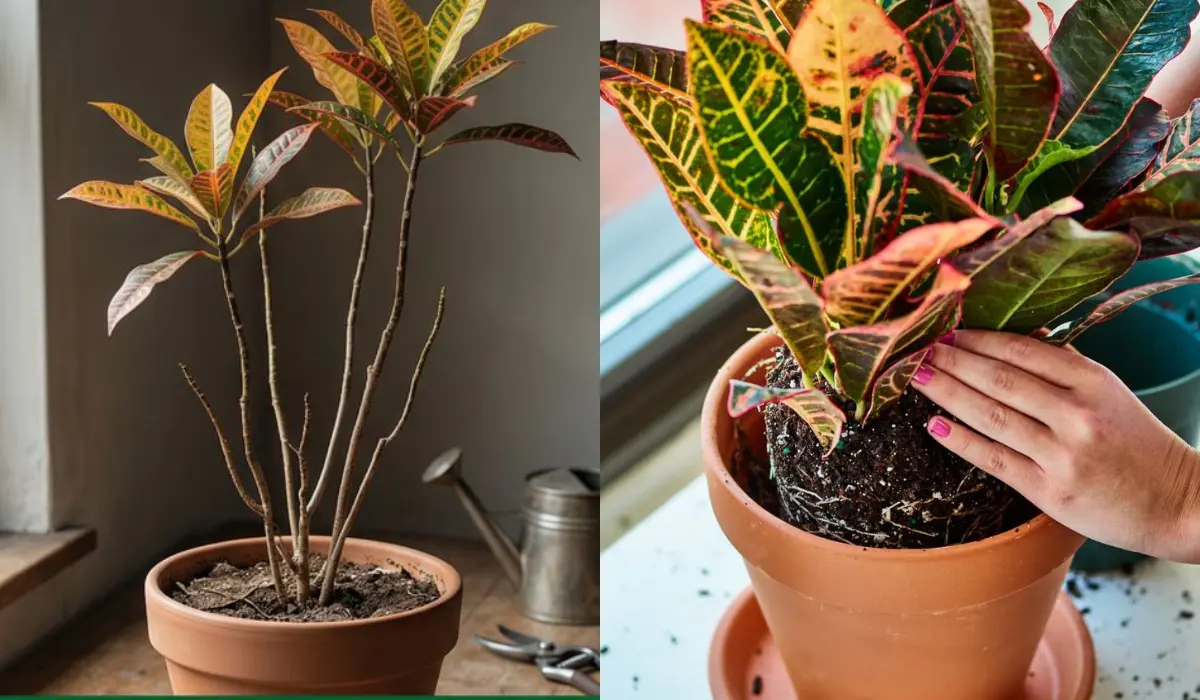
Croton plant care is easier than many gardeners think. These tropical plants are famous for their bright red, yellow, orange, and green leaves, but they need the right conditions to maintain those beautiful colors. In my experience, giving crotons enough light and avoiding overwatering are the two biggest secrets to success.
I have grown croton plants both in pots and in my garden for several years. When I bought my first croton, I placed it in a shaded corner because I thought colorful plants preferred less sun. Within a few weeks, the new leaves started turning green and the plant looked dull. After moving it to a brighter location, the colors returned. Since then, I have learned what works best, and I am sharing my experience in this guide.
IN THIS ARTICLE
About Croton Plant
Croton is a tropical ornamental plant grown mainly for its colorful foliage. The leaves can be narrow, broad, twisted, or curled depending on the variety. Their bright colors make them one of the most attractive plants for homes, balconies, patios, and gardens.
Crotons grow best in warm and humid conditions and can be grown indoors or outdoors in suitable climates.
Light Requirements for Croton Plants
Light is the most important part of croton plant care.
From my experience, crotons need plenty of bright light to keep their colorful leaves. Without enough light, the plant may survive, but its colors will gradually fade.
For healthy growth:
- Place indoor crotons near a bright window.
- East-facing and west-facing windows work well.
- Give the plant several hours of bright indirect sunlight daily.
- Outdoor plants can receive gentle morning sun.
If the leaves start becoming mostly green, the plant usually needs more light.
Watering Croton Plants
Crotons like slightly moist soil, but they do not like sitting in water.
I always check the top layer of soil before watering. If the top 1 to 2 inches feel dry, I water thoroughly until excess water drains out.
My watering tips include:
- Keep the soil evenly moist.
- Never allow the pot to stay waterlogged.
- Reduce watering during winter.
- Use containers with drainage holes.
Overwatering is one of the quickest ways to damage a croton plant.
Humidity and Temperature
Because crotons are tropical plants, they enjoy warm temperatures and higher humidity levels.
In my garden, crotons grow best during humid weather. Indoor plants sometimes struggle when the air becomes too dry.
For best results:
- Keep temperatures above 15°C (60°F).
- Maintain moderate to high humidity.
- Mist the leaves occasionally.
- Use a pebble tray or humidifier if needed.
Avoid placing the plant near cold drafts, air conditioners, or heaters.
Best Soil for Croton Plants
Healthy roots need well-draining soil.
I use a rich potting mix that holds some moisture while allowing excess water to drain away.
A good mix may contain:
- Garden soil
- Compost
- Perlite
- Coarse sand
The soil should be loose, fertile, and well-draining.
Fertilizing Croton Plants
Crotons benefit from regular feeding during their active growing season.
I feed my croton every few weeks during spring and summer using a balanced fertilizer. This helps the plant produce strong growth and brighter leaf colors.
For best results:
- Feed every 2 to 4 weeks during active growth.
- Use a balanced liquid fertilizer.
- Follow package directions carefully.
- Stop fertilizing during winter.
Too much fertilizer can damage roots and cause leaf burn.
Pruning and Maintenance
Regular maintenance keeps crotons looking attractive.
Whenever I see damaged or leggy stems, I prune them. This encourages fuller growth and improves the overall appearance of the plant.
Maintenance tips:
- Remove yellow or damaged leaves.
- Trim leggy stems.
- Wipe dust from leaves regularly.
- Check for pests every few weeks.
Clean leaves can absorb more sunlight and stay healthier.
Croton Plant Diseases, Pests and Care Solutions
Crotons are generally strong plants, but they can sometimes suffer from pests and diseases.
Spider Mites
Spider mites are tiny pests that usually appear when the air is dry. You may notice fine webbing on leaves and yellow spots.
Solution: Increase humidity and spray neem oil or insecticidal soap.
Mealybugs
Mealybugs look like small white cottony clusters on stems and leaves.
Solution: Remove them with a cotton swab dipped in rubbing alcohol and apply neem oil.
Scale Insects
Scale insects attach themselves to stems and leaves and suck plant sap.
Solution: Scrape them off gently and treat the plant with horticultural oil.
Aphids
Aphids are small insects that gather on new growth and feed on plant juices.
Solution: Wash them off with water and use neem oil if needed.
Root Rot
Root rot is usually caused by overwatering and poor drainage.
Solution: Reduce watering, improve drainage, and remove damaged roots.
Leaf Spot Disease
Leaf spot appears as dark spots on leaves due to fungal or bacterial infections.
Solution: Remove infected leaves and improve air circulation around the plant.
Common Problems and Solutions
Leaves Turning Green – Usually caused by insufficient light.
Leaf Drop – Usually caused by sudden temperature changes, underwatering, overwatering, or low humidity.
Yellow Leaves – Usually caused by overwatering or poor drainage.
Brown Leaf Tips – Usually caused by low humidity, dry air, or underwatering.
Drooping Leaves – Usually caused by watering stress or temperature fluctuations.
Slow Growth – Usually caused by low light, lack of nutrients, or cool temperatures.
Dull Leaf Colors – Usually caused by insufficient sunlight.
Soft Stems – Usually caused by excessive moisture around the roots.
Is Croton Plant Toxic?
Yes, croton plants contain a milky sap that can be toxic.
Keep the plant away from:
- Children
- Dogs
- Cats
The sap may also cause skin irritation, so wearing gloves while pruning is a good idea.
FAQ for Croton Plant Care
Do Crotons need direct sunlight?
In my experience, crotons grow best in bright light and can handle a few hours of gentle morning direct sunlight. However, harsh afternoon sun may scorch the leaves, especially during hot summer months. Bright indirect light is usually the best option for maintaining vibrant leaf colors.
Can crotons grow in shade?
Crotons can survive in shade, but they usually lose their bright colors and produce more green leaves. In my experience, crotons look their best when grown in bright indirect light or a location that receives plenty of filtered sunlight throughout the day.
What is the lifespan of a croton plant?
With proper care, a croton plant can live for many years, often 10 to 20 years or even longer. I have seen healthy crotons continue growing beautifully for years when they receive enough light, water, and regular maintenance.
Do crotons like small pots?
Crotons do not mind being slightly root-bound, but they should not stay in a very small pot for too long. From my experience, choosing a pot that is slightly larger than the root ball helps the plant grow healthier while preventing excess soil from staying wet.
Conclusion
Croton plant care becomes simple once you understand the plant’s basic needs. Based on my experience, providing bright light, proper watering, good humidity, and occasional feeding will keep your croton healthy and colorful throughout the year. Regular checks for pests and diseases can prevent most problems before they become serious, allowing your plant to thrive for many years.
How to Deadhead Peonies and Trim Peonies After They Bloom – My Experience
