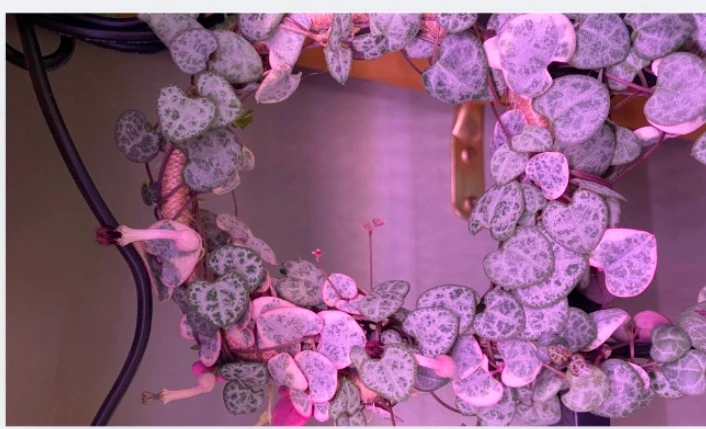
String of Hearts plant care is simple when you understand its basic needs. In this guide, I share my personal experience growing this beautiful trailing plant, including watering, sunlight, soil, fertilizer, humidity, pruning, common problems, and easy care tips.
I have been growing houseplants for several years, and the String of Hearts is one of the easiest trailing plants I have cared for. Like many beginners, I made a few mistakes at first by watering it too often. After learning its natural growing habits, my plant became fuller, healthier, and started producing long cascading vines. In this guide.
IN THIS ARTICLE
What is a String of Hearts Plant?
The String of Hearts (Ceropegia woodii) is a beautiful trailing succulent vine known for its heart-shaped leaves with attractive silver patterns. The leaves often develop a purple shade underneath, making the plant even more decorative.
Native to South Africa, this plant stores water in its leaves and underground tubers, which means it prefers slightly dry conditions rather than constantly wet soil.
String of Hearts Plant Care
Growing this plant is easy once you understand its natural habitat. Here are the care tips I personally follow.
Watering
The biggest mistake people make is overwatering.
Since String of Hearts stores moisture in its leaves, it can tolerate short dry periods much better than wet soil.
From my experience:
- Check the soil with your finger before watering.
- Water only when the top 2–3 inches of soil feel dry.
- Reduce watering during winter.
- Never let the pot remain in standing water.
- Always use a pot with drainage holes.
If the leaves become soft and yellow, the plant is probably getting too much water.
If the leaves become thin or wrinkled, it usually needs watering.
Sunlight
Light plays a major role in keeping the vines healthy.
I keep my plant near an east-facing window where it receives bright morning sunlight and indirect light throughout the day.
For the best growth:
- Provide 4–6 hours of bright indirect light.
- Gentle morning sun is beneficial.
- Avoid harsh afternoon sunlight.
- Rotate the pot every few weeks for even growth.
Insufficient light often causes long stems with fewer leaves.
Best Soil
Because this is a succulent vine, fast-draining soil is essential.
I use a cactus potting mix with extra perlite, and it has worked very well.
A good soil mix should include:
- Cactus or succulent potting mix
- Perlite
- Coarse sand
- Small orchid bark (optional)
Avoid heavy garden soil because it holds too much moisture.
Temperature and Humidity
String of Hearts adapts well to normal indoor conditions.
Ideal growing conditions:
- Temperature: 18°C–30°C
- Keep away from cold drafts.
- Protect from frost.
- Average indoor humidity is sufficient.
Extra humidity is usually unnecessary.
Fertilizer
This plant is not a heavy feeder.
I apply a balanced liquid fertilizer diluted to half strength once every month during spring and summer.
Tips:
- Fertilize only during active growth.
- Skip fertilizer during winter.
- Avoid overfeeding, as it may damage the roots.
Pruning
Pruning encourages a fuller plant.
Whenever my vines become too long, I trim a few stems. Within a few weeks, new branches usually appear.
Pruning also helps:
- Remove damaged vines.
- Encourage bushier growth.
- Improve airflow.
- Maintain a neat appearance.
Repotting
String of Hearts prefers being slightly root-bound.
I usually repot every 2–3 years or when roots start coming out of the drainage holes.
When repotting:
- Choose a pot only one size larger.
- Refresh the potting mix.
- Avoid damaging the delicate roots.
Common Problems
Even healthy plants can face occasional issues.
| Problem | Possible Cause | Solution |
|---|---|---|
| Yellow leaves | Overwatering | Let soil dry before watering |
| Wrinkled leaves | Underwatering | Water deeply when soil is dry |
| Long bare vines | Low light | Move to a brighter location |
| Root rot | Poor drainage | Replace soil and trim damaged roots |
| Slow growth | Lack of nutrients | Feed monthly during growing season |
| Brown crispy leaves | Strong afternoon sun | Move to filtered light |
Pests
Although generally pest-resistant, I occasionally inspect my plant for insects.
Watch for:
- Mealybugs
- Spider mites
- Aphids
If pests appear:
- Wipe leaves with a damp cloth.
- Spray neem oil every 7–10 days.
- Improve air circulation around the plant.
How to Make String of Hearts Fuller
One trick that has worked well for me is placing longer vines back onto the soil surface. The nodes often develop roots and create new growth points.
You can also:
- Prune regularly.
- Give bright indirect light.
- Feed during spring and summer.
- Avoid overwatering.
- Pin vines back into the soil.
FAQ – String of Hearts Plant Care
Why are my String of Hearts leaves falling off?
Leaf drop is usually caused by overwatering, underwatering, sudden temperature changes, or insufficient light.
Can String of Hearts grow indoors?
Yes. It grows extremely well indoors when placed near a bright window with indirect sunlight.
How often should I water String of Hearts?
Only water after the soil has dried out. The exact frequency depends on the season, temperature, and indoor conditions.
Does String of Hearts need direct sunlight?
It prefers bright indirect light. A little morning sunlight is beneficial, but strong afternoon sun can scorch the leaves.
Is String of Hearts easy for beginners?
Yes. It is one of the easiest trailing succulents for beginners because it requires very little maintenance.
Conclusion
In my experience, String of Hearts plant care is surprisingly easy once you avoid overwatering and provide bright indirect light. With the right soil, occasional feeding, and proper watering, this charming trailing plant rewards you with long cascading vines and beautiful heart-shaped leaves. If you’re looking for a low-maintenance indoor plant that adds elegance to your home, the String of Hearts is an excellent choice.
You May Also Like
