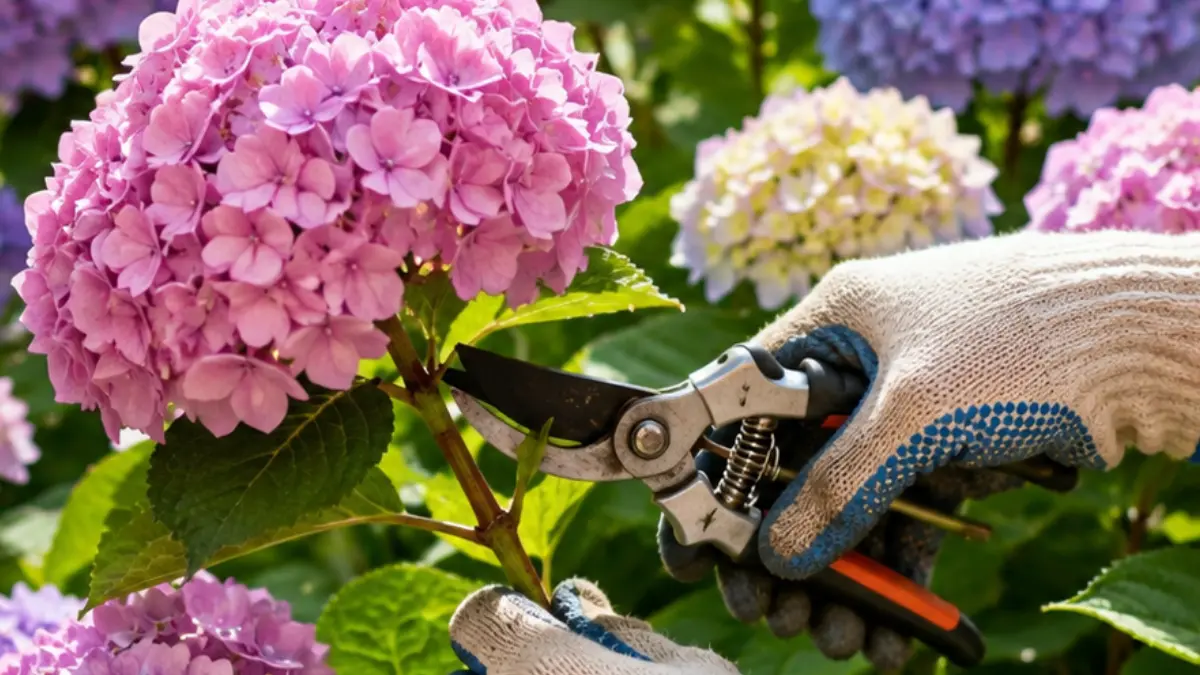
Learn how to prune hydrangeas step by step with this beginner-friendly guide. Discover the best pruning techniques, common mistakes to avoid, and expert tips to keep your hydrangeas healthy and blooming every year.
Hydrangeas are among my favorite flowering shrubs because they reward a little care with stunning blooms year after year. When I first started growing hydrangeas, I was afraid to prune them. I worried that one wrong cut would stop them from flowering. After learning the proper technique and observing how the plants responded, I realized that pruning is not difficult—it simply requires patience and knowing where to cut.
Table of Contents
How to Prune Hydrangeas Step by Step
Step 1: Identify Your Hydrangea Variety
Before picking up your pruning shears, find out which type of hydrangea you have. This is the most important step because different varieties bloom on different types of wood.
Some hydrangeas produce flowers on old wood, meaning the flower buds form during the previous growing season. Others bloom on new wood, which develops in spring. Pruning at the wrong time can remove flower buds and reduce blooming.
If you are unsure of the variety, avoid heavy pruning and only remove dead or damaged stems.
Step 2: Choose the Right Time to Prune
Timing makes all the difference.
- Prune old wood hydrangeas immediately after they finish flowering.
- Prune new wood hydrangeas in late winter or early spring before new growth starts.
Avoid pruning in late fall because many hydrangeas are already developing next year’s flower buds.
Step 3: Gather Clean, Sharp Tools
Using sharp tools creates clean cuts that heal faster and reduce the risk of disease.
You’ll need:
- Sharp bypass pruning shears
- Loppers for thick branches
- Gardening gloves
- Rubbing alcohol to disinfect blades
I always clean my pruning tools before moving from one plant to another. It’s a simple habit that helps prevent diseases from spreading in the garden.
Step 4: Remove Dead, Broken, and Diseased Stems
Begin by cutting away anything that is no longer healthy.
Look for stems that are:
- Dry and brittle
- Brown or gray
- Broken by wind
- Diseased or damaged
Cut these stems back to healthy green wood or remove them from the base if they are completely dead.
Step 5: Thin Out Weak Growth
Hydrangeas often produce thin stems that struggle to support heavy flower heads.
Remove:
- Weak shoots
- Thin branches
- Crossing stems
- Branches growing toward the center
This improves airflow and allows sunlight to reach every part of the plant, helping reduce fungal problems.
Step 6: Prune Above Healthy Buds
Whenever you shorten a healthy stem, make your cut just above a pair of healthy buds.
For the best results:
- Leave about ¼ inch above the buds.
- Make a slightly angled cut.
- Avoid cutting too close to the buds.
Healthy buds will grow into strong new stems that produce beautiful flowers.
Step 7: Shape the Plant Naturally
Instead of cutting every branch to the same height, shape the shrub naturally.
Aim for:
- A rounded appearance
- Even spacing between branches
- An open center for better airflow
A naturally shaped hydrangea not only looks more attractive but also grows stronger throughout the season.
Step 8: Rejuvenate Older Hydrangeas
Older hydrangeas sometimes become woody and produce fewer flowers.
To refresh the plant:
- Remove up to one-third of the oldest stems at ground level.
- Leave younger stems untouched.
- Repeat this process over the next few years.
Gradual rejuvenation encourages vigorous new growth without putting unnecessary stress on the plant.
Step 9: Clean Up After Pruning
Once pruning is complete, remove all cut branches and fallen leaves.
Cleaning around the plant helps:
- Prevent pests
- Reduce fungal diseases
- Improve garden appearance
If any branches show signs of disease, throw them away instead of adding them to your compost pile.
Step 10: Water and Mulch
Hydrangeas appreciate a little extra care after pruning.
Water the plant deeply so the roots receive enough moisture.
Then spread a 2–3 inch layer of organic mulch around the base while keeping it a few inches away from the stem. Mulch helps retain soil moisture, suppress weeds, and protect the roots during hot weather.
Step 11: Feed for Healthy Growth
A balanced slow-release fertilizer or compost can help support healthy new growth after pruning.
Avoid applying too much nitrogen because it encourages leafy growth instead of flowers.
Water thoroughly after feeding so nutrients can reach the root system.
Common Mistakes to Avoid
Even experienced gardeners occasionally make mistakes.
Avoid these common pruning errors:
- Pruning before identifying your hydrangea variety
- Cutting at the wrong time of year
- Removing healthy flower buds
- Using dull or dirty pruning tools
- Pruning too much in one season
- Ignoring dead or diseased branches
A few careful cuts are always better than heavy, unnecessary pruning.
Final Thoughts
Learning how to prune hydrangeas is easier than many gardeners think. The key is understanding your plant, pruning at the right time, and making clean, careful cuts. I always remind beginners that hydrangeas don’t need aggressive pruning every year. Removing dead wood, thinning weak stems, and maintaining a natural shape is often enough to keep the plant healthy and covered with beautiful blooms. With a little practice, pruning will become one of the easiest and most rewarding parts of caring for your hydrangeas.
FAQs – Prune Hydrangeas
When is the best time to prune hydrangeas?
It depends on the variety. Old wood hydrangeas should be pruned after flowering, while new wood hydrangeas are best pruned in late winter or early spring.
Can I prune hydrangeas in the fall?
Fall pruning is generally not recommended because many hydrangeas develop next year’s flower buds before winter.
How much should I prune my hydrangea?
For routine maintenance, remove dead, damaged, and weak stems. Avoid removing more than one-third of the plant in a single season unless rejuvenating an older shrub.
What happens if I prune hydrangeas too much?
Over-pruning can reduce or eliminate blooms for the following season, especially in varieties that flower on old wood.
Which tools are best for pruning hydrangeas?
Sharp bypass pruning shears are ideal for most stems, while loppers work well for thicker branches.
