Quick Tips
Grow capsicum in well-draining soil and provide 6–8 hours of sunlight daily. Water when the top soil feels dry, feed regularly with compost and potassium-rich fertilizer, support branches during fruiting, and harvest mature peppers regularly for continuous production.
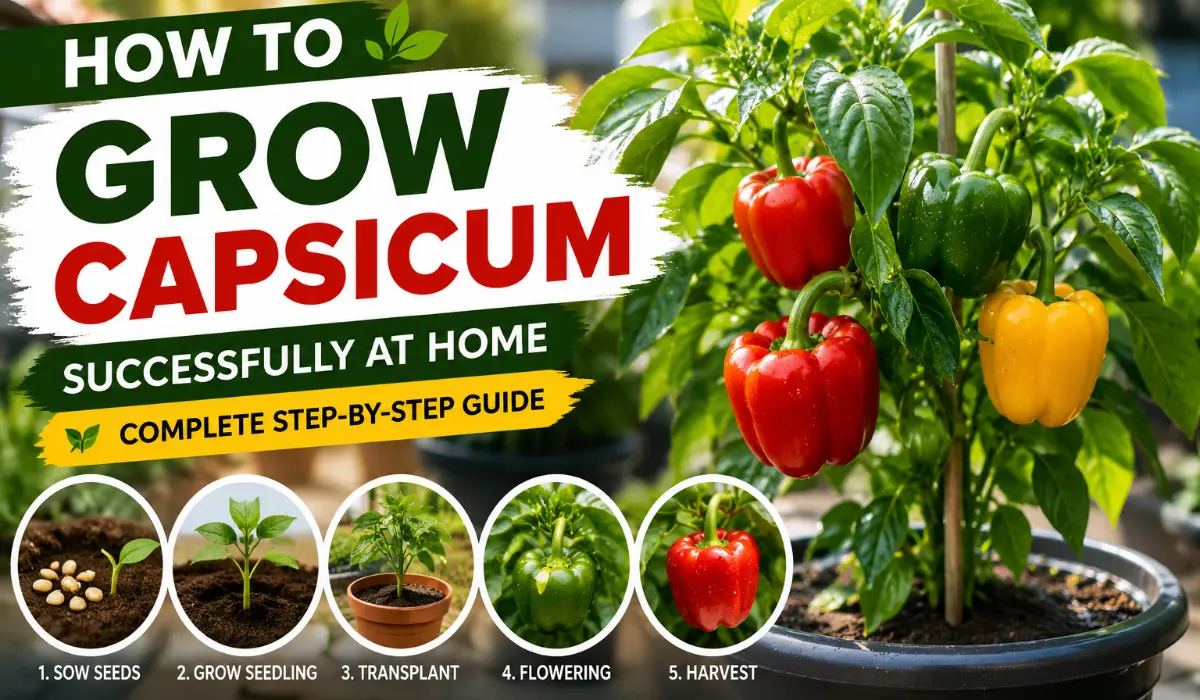
How to grow capsicum successfully at home? Capsicum is one of the easiest and most rewarding vegetables to grow in a home garden. With the right variety, fertile soil, proper watering, and enough sunlight, you can harvest fresh, colorful capsicums for several months. Whether you grow them in pots, grow bags, or directly in the garden, healthy plants can produce a generous crop throughout the season.
I have been growing vegetables and plants for years, and capsicum is one of my favorite crops because it grows well in containers and requires simple care. In this guide, I am sharing the methods that have worked successfully in my garden.
Table of Contents
About Capsicum
Capsicum, also known as bell pepper or sweet pepper, belongs to the nightshade family. It is rich in vitamins A and C and comes in green, red, yellow, orange, and purple colors.
Best Capsicum Varieties for Home Gardens
Choose high-yielding varieties for better production:
- California Wonder
- Yolo Wonder
- Indra Hybrid
- Bharat Hybrid
- Bomby Hybrid
- Green Bell Pepper
- Yellow Bell Pepper
- Red Bell Pepper
For beginners, California Wonder is one of the best varieties because it is productive and easy to grow.
Best Soil for Capsicum
Healthy soil is the foundation of a successful capsicum crop.
I use well-draining sandy loam soil because excess water can damage the roots. The ideal soil pH is 6.0 to 6.8.
Soil Mix Formula
- 40% Garden soil
- 30% Vermicompost
- 20% Cocopeat
- 10% River sand
This mixture provides:
- Excellent drainage
- Strong root development
- Good moisture retention
- Better nutrient availability
Before planting, mix everything thoroughly and remove stones or debris.
How to Grow Capsicum from Seeds Step by Step
Growing capsicum from seeds is easy if done correctly.
Step 1: Prepare Seed Tray
Fill a seed tray or small pots with a seed-starting mix.
Step 2: Sow Seeds
- Sow seeds about 0.5 cm deep.
- Cover lightly with soil.
- Water gently using a spray bottle.
Step 3: Keep Warm
Place the tray in a warm location.
- Ideal temperature: 22°C–30°C
Seeds usually germinate within 7–14 days.
Step 4: Provide Light
Once seedlings emerge:
- Move them to a bright sunny area.
- Ensure good airflow.
Step 5: Transplant Seedlings
When seedlings develop 4–5 true leaves:
- Transplant them into pots or garden beds.
- Maintain spacing of 40–50 cm between plants.
Step 6: Water After Transplanting
Water immediately after transplanting to help roots settle.
Watering Capsicum Plants
Proper watering is essential for healthy growth and fruit production.
Watering Tips
- Water deeply but not frequently.
- Allow the top inch of soil to dry before watering again.
- Keep soil consistently moist.
- Avoid waterlogging.
- Water early in the morning.
During hot summer weather, plants may require more frequent watering.
Best Fertilizer for Capsicum Plants
Capsicum plants need different nutrients at different growth stages.
Early Growth Stage (0–6 Weeks)
Use balanced or nitrogen-rich fertilizers to encourage:
- Healthy leaves
- Strong stems
- Root development
Avoid heavy fruiting fertilizers during this stage.
Flowering and Fruiting Stage
Switch to fertilizers rich in phosphorus and potassium.
- NPK 8:4:32 works well.
- Helps improve flowering and fruit production.
Calcium Supplement
To prevent Blossom End Rot:
- Add crushed eggshells around the plant base.
- Use calcium-rich supplements if needed.
Organic Feeding
For long-term plant health:
- Apply compost or well-rotted manure once every month.
Best Sunlight and Location for Capsicum
Capsicum thrives in warm and sunny conditions.
Ideal Growing Conditions
- 6–8 hours of direct sunlight daily
- Temperature between 18°C and 28°C
- Warm and sheltered location
- Good air circulation
Best Places to Grow
- Sunny balcony
- Terrace garden
- Backyard vegetable garden
- Near a south-facing window
If growing in containers, use pots or grow bags of at least 40 liters capacity.
Care During Flowering and Fruiting
Once flowering begins:
- Avoid overwatering.
- Support heavy branches with bamboo stakes.
- Remove damaged leaves.
- Keep weeds away from the base.
- Feed plants regularly with potassium-rich fertilizer.
These simple practices improve fruit quality and increase yield.
How to Harvest Capsicum Carefully
Harvesting at the right time ensures better taste and continued production.
Harvesting Tips
- Pick fruits when they reach full size.
- Use clean pruning scissors.
- Do not pull fruits by hand.
- Harvest regularly to encourage more flowering.
- Leave a small portion of the stem attached to the fruit.
Green capsicums can be harvested early, while colored varieties should remain on the plant until they develop their final color.
How to Protect Capsicum Plants from Pests and Diseases
Regular monitoring helps prevent major problems.
Common Pests
Aphids and Whiteflies
- Spray neem oil or insecticidal soap.
- Wash insects off with a strong water spray.
Spider Mites
- Keep surrounding areas slightly moist.
- Use sulfur-based sprays if infestation becomes severe.
Caterpillars (Fruit Borers)
- Handpick caterpillars.
- Apply Bacillus thuringiensis (Bt) when necessary.
Common Diseases
Powdery Mildew and Leaf Spots
- Improve air circulation.
- Apply copper or sulfur-based fungicides.
Damping Off
- Avoid excessive watering.
- Let the soil surface dry slightly between waterings.
Bacterial Wilt
- Use disease-free seedlings.
- Remove infected plants immediately.
- Avoid planting capsicum repeatedly in the same soil.
Prevention Tips
- Maintain proper spacing.
- Avoid wetting leaves during watering.
- Remove diseased leaves quickly.
- Keep the garden clean and weed-fre
Conclusion
Growing capsicum at home is simple when you provide the right soil, sunlight, water, and nutrition. In my gardening experience, using a well-draining sandy loam soil mix with vermicompost, cocopeat, and sand has consistently produced healthy plants and heavy harvests. By following these steps and giving regular care, you can successfully grow capsicum at home and enjoy fresh, flavorful peppers straight from your garden throughout the growing season.
How to Grow Tomatoes in Pots and Containers – My Personal Gardening Experience
