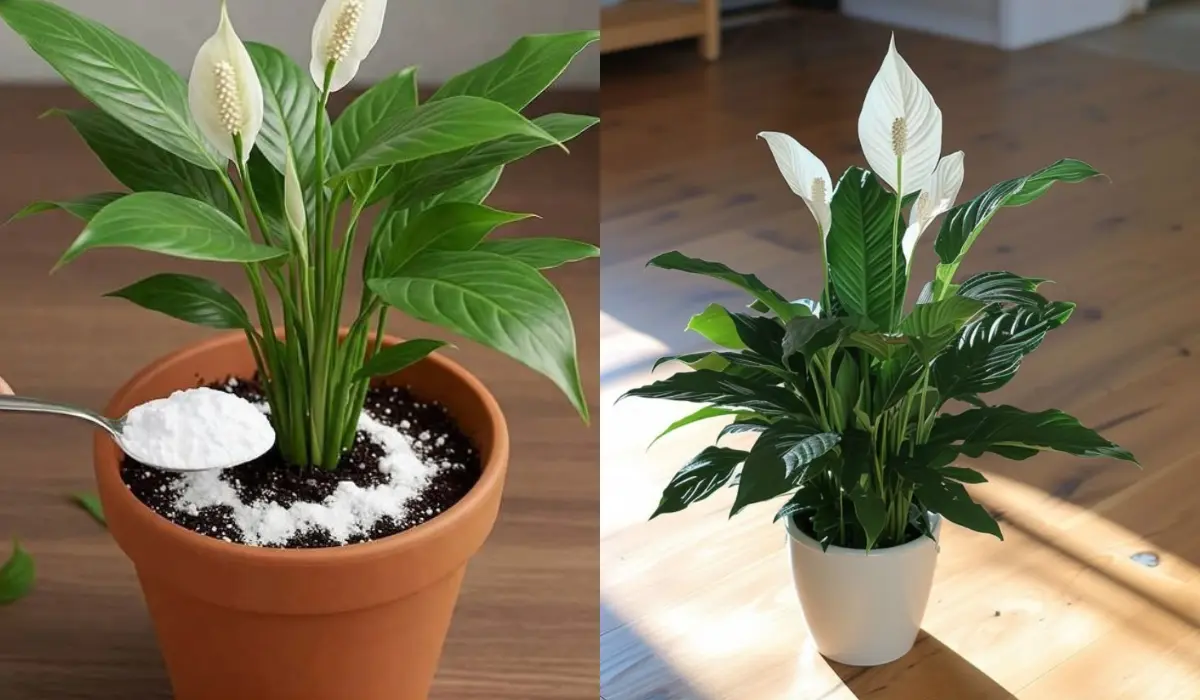
Peace Lily care starts with providing bright, indirect sunlight so the plant can grow healthy without leaf burn. It prefers slightly moist but well-draining soil that never stays soggy. Water the plant only when the top 2 inches of soil becomes dry to touch. Always use a pot with proper drainage holes to prevent root rot. Keep it in a warm and humid indoor place for best growth. Avoid cold drafts and direct harsh sunlight to protect the leaves.
I have grown Peace Lily in my home garden for several years and faced many real problems while caring for it. At first, I struggled with overwatering, which caused yellow leaves and weak roots. I also kept the plant in low light, and it stopped producing flowers for a long time. Sometimes dry indoor air caused brown leaf tips and slow growth. In this article, I am sharing my real experience and simple solutions that helped my plant recover and grow healthy again.
IN THIS ARTICLE
About this Peace Lily
Peace lily is a tropical evergreen plant that thrives in warm and humid environments. It is widely used as an indoor decorative plant due to its attractive foliage and long-lasting white blooms.
| Detail | Information |
|---|---|
| Botanical name | Spathiphyllum |
| Common name | Peace Lily |
| Plant type | Tropical indoor flowering plant |
| Mature size | 1–4 feet depending on variety |
| Flowering season | Spring to early summer (can bloom indoors year-round) |
| Native region | Tropical Americas |
| Indoor/outdoor use | Mostly indoor plant |
Peace lily is beginner-friendly and adapts well to indoor conditions when basic care needs are fulfilled properly.
Benefits of Peace Lily
Peace lily is not just a decorative plant but also offers several practical benefits for indoor environments.
- Helps improve indoor air quality
- Removes toxins from the air naturally
- Enhances home and office decoration
- Increases indoor humidity levels
- Easy to maintain for beginners
- Creates a calming natural environment
This makes peace lily a perfect choice for both beginners and plant lovers.
Peace Lily sunlight requirements
Peace lily grows best in bright, indirect light, similar to filtered sunlight coming through curtains. It cannot tolerate harsh direct sun, but it also struggles in very dark corners.
- Best placed near east-facing window
- Avoid direct afternoon sunlight
- Can survive in low light but grows slowly
- Too little light stops flowering
- Indirect light keeps leaves healthy
- Rotate plant for balanced growth
Proper light helps maintain leaf color and encourages blooming.
Peace Lily water requirements
Watering is one of the most important parts of Peace Lily care. This plant likes moist soil but does not tolerate soggy conditions.
- Keep soil lightly damp but not soggy
- Water when top layer starts drying
- Give a good soak when plant droops
- Never allow standing water in pot
- Reduce watering in winter season
- Always check soil before watering
Correct watering prevents yellow leaves and root rot problems.
Best soil for Peace Lily
Peace lily needs a well-draining soil mix that retains some moisture but does not become waterlogged.
- Use light potting mix
- Add coco peat for moisture control
- Mix perlite or sand for drainage
- Add compost for nutrients
- Avoid heavy clay soil
- Ensure drainage holes in pot
Good soil keeps roots strong and healthy.
Best temperature and humidity for Peace Lily
Peace lily grows best in warm and humid conditions, similar to its natural tropical environment.
- Keep temperature between 18°C to 27°C
- Thrives in 50%+ humidity
- Mist leaves regularly in dry weather
- Keep away from cold drafts
- Avoid direct AC airflow
- Use pebble tray for humidity
Stable environment improves leaf health and growth speed.
Best fertilizer for Peace Lily
Fertilizer supports growth and flowering but should be used carefully to avoid damage.
- Use diluted balanced liquid fertilizer
- Apply every 4–6 weeks in growing season
- Do not fertilize in fall or winter
- Organic compost works well
- Avoid over-fertilizing leaves
- Stop if leaf tips burn
Light feeding is enough for healthy growth.
Common problems and solutions
- Light problem – Leaves turning pale or no flowers
Move plant to bright indirect sunlight area. - Watering issue – Yellow leaves or drooping plant
Adjust watering schedule and avoid overwatering. - Humidity problem – Brown leaf tips
Increase humidity using misting or pebble tray. - Temperature stress – Slow growth or weak plant
Keep plant in stable warm room away from cold drafts. - Fertilizer burn – Brown edges on leaves
Reduce fertilizer strength and frequency. - Root rot – Soft black roots and plant decline
Repot in fresh dry soil and reduce watering.
FAQ – Peace Lily Plant Care
Why does my Peace Lily droop suddenly?
This usually happens when the plant is underwatered. Water it properly and it will recover quickly.
How much sunlight does Peace Lily need?
It needs bright indirect light. Direct sun can burn leaves, and low light reduces growth.
Can Peace Lily grow indoors without sunlight?
It can survive in low light but needs indirect natural light for healthy growth.
Why are Peace Lily leaves turning yellow?
Most often due to overwatering or poor drainage in soil.
Is Peace Lily safe for home pets?
It is mildly toxic if eaten, so keep it away from pets and children.
Conclusion
Peace Lily care becomes simple when you understand its basic needs like light, water, humidity, and temperature balance. From my personal gardening experience, this plant reacts quickly to small changes, whether it is overwatering or lack of light. Once you correct its environment, it becomes healthy again and starts growing beautifully.
If you follow proper Peace Lily care, your plant will stay green, fresh, and may even produce elegant white blooms throughout the year. My personal tip is simple: never follow a fixed watering schedule—always check soil moisture before watering.
How to Take Care of Jade Plant Indoors | Complete Jade Plant Care Guide
