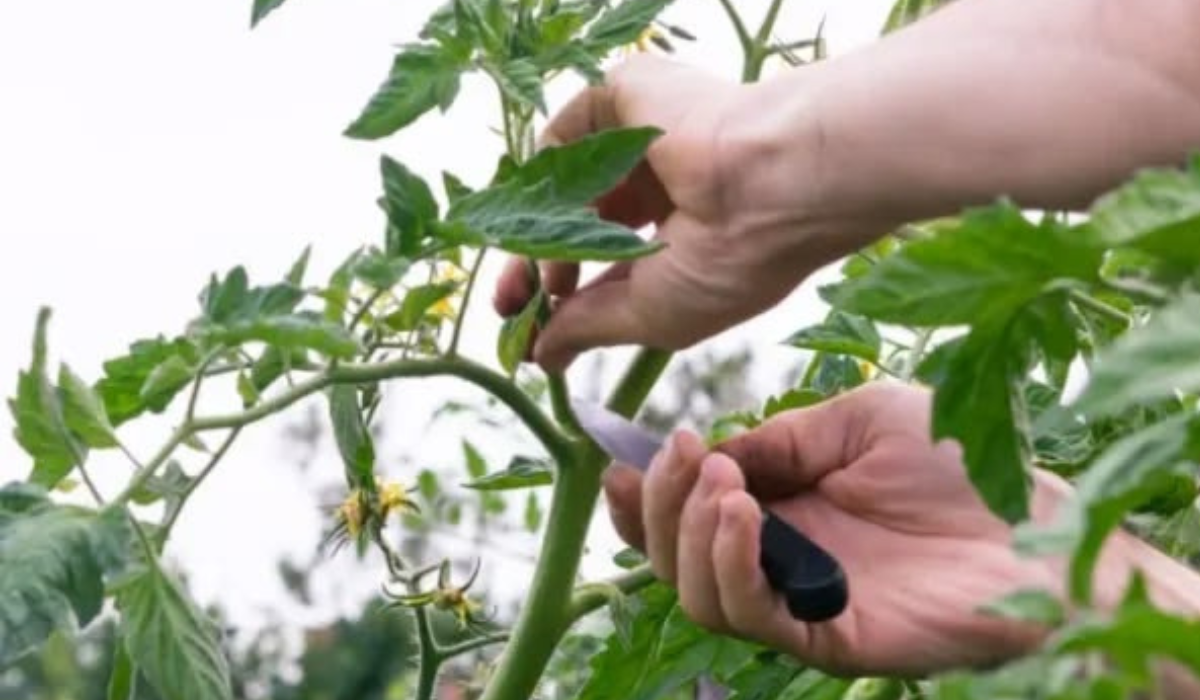
Learning how to prune tomato plants can help you control excessive growth, improve airflow, and keep your plants easier to manage throughout the growing season. Tomato plants can grow quickly, producing many leaves, branches, and side shoots. Without occasional tomato plant pruning, some varieties can become overcrowded and difficult to support.
From my experience growing plants, the biggest mistake is not failing to prune—it is over-pruning. Tomato plants need healthy leaves to produce energy through photosynthesis. Therefore, the goal of pruning tomato plants is not to remove as much growth as possible. Instead, remove dead, diseased, damaged, or unnecessary growth while keeping enough healthy foliage for strong growth and fruit production.
IN THIS ARTICLE
Why Should You Prune Tomato Plants?
When done correctly, pruning tomato plants can help maintain a healthier and more manageable plant.
The main benefits of tomato plant pruning include:
- Improving airflow around crowded branches
- Removing diseased and damaged growth
- Keeping leaves away from wet soil
- Making the plant easier to support
- Making it easier to inspect for pests and diseases
- Improving access to ripening tomatoes
- Controlling excessive side growth
However, pruning does not automatically guarantee more tomatoes. Healthy leaves are essential for photosynthesis, so removing too many leaves can reduce the plant’s ability to produce energy.
The best tomato pruning tips focus on balance. A well-pruned tomato plant should be organized and open enough for good airflow but still have plenty of healthy green leaves.
First Identify Your Tomato Plant Type
Before you start pruning, identify whether your plant is determinate or indeterminate. This is important because the two types grow differently and require different pruning methods.
Pruning Determinate Tomato Plants
Determinate tomatoes grow to a limited size and produce much of their crop within a shorter period. Many bush-type tomatoes fall into this category.
These plants usually need only light pruning.
Remove:
- Dead leaves
- Diseased leaves
- Severely damaged branches
- Leaves touching the soil
Avoid heavy pruning of healthy branches. Since determinate tomatoes have a limited growth pattern, removing too much productive growth may reduce the potential harvest.
Pruning Indeterminate Tomatoes
Indeterminate tomato plants continue growing throughout the season when conditions are suitable. They can become tall and produce many side shoots.
Pruning indeterminate tomatoes is often more useful, especially when the plant is grown on a stake, trellis, or other vertical support.
You can selectively remove excessive side growth to keep the plant organized and prevent serious overcrowding.
What Are Tomato Plant Suckers?
A tomato sucker is a small shoot that grows between the main stem and a side branch.
If left to grow, a sucker can develop into a large secondary stem and may eventually produce flowers and tomatoes.
Many gardeners ask whether they should remove all tomato suckers. In my experience, removing every sucker is not always necessary. The right decision depends on the size of the plant, available space, and support system.
Consider removing a sucker when:
- The plant is becoming too crowded
- It is growing toward the ground
- It is competing with the main stems
- You are growing the plant vertically in limited space
If your plant has enough space and strong support, you may choose to keep a healthy sucker as an additional fruiting stem.
How to Prune Tomato Plants Step by Step
1. Inspect the Plant Before Pruning
Before making any cuts, look carefully at the entire plant.
Identify:
- The main stem
- Important fruiting branches
- Diseased leaves
- Leaves touching the soil
- Areas with excessive growth
This simple inspection can help prevent accidentally removing a healthy branch that is producing flowers or fruit.
2. Remove Leaves Touching the Soil
Start with the lowest leaves.
Leaves that touch the soil can become dirty when water splashes onto them during rain or watering. They may also have poor airflow.
Remove these leaves gradually. There is no need to remove all lower foliage at once.
3. Remove Dead and Diseased Leaves
Remove leaves that are completely dead, severely damaged, or showing clear signs of disease.
Possible warning signs include:
- Spreading brown spots
- Black lesions
- Severe yellowing
- Dead tissue
- Unusual fungal growth
Use clean, sharp scissors when removing larger leaves or branches. If you are working with a diseased plant, clean your tools before pruning another tomato plant.
4. Remove Selected Tomato Suckers
To remove tomato suckers, look at the joint where a side branch meets the main stem.
Small, soft suckers can often be removed gently with your fingers. Larger suckers should be cut with clean, sharp pruning scissors.
Do not automatically remove every sucker. First consider whether the plant is becoming too crowded and whether your support system can handle additional stems.
5. Improve Airflow Gradually
If your tomato plant has become extremely dense, remove a few unnecessary leaves or side shoots to create more space between branches.
Avoid aggressively opening the entire center of the plant in one session. Healthy green leaves are important for producing energy and supporting fruit development.
Should You Remove Tomato Plant Leaves?
Yes, but only when there is a good reason.
Healthy green leaves should generally remain on the plant because they produce energy through photosynthesis.
Remove leaves that are:
- Dead
- Diseased
- Severely damaged
- Touching the soil
- Creating serious overcrowding
Avoid removing healthy leaves simply because the plant looks bushy. Over-pruning can expose developing tomatoes to excessive sunlight and increase the risk of sunscald.
How to Prune Tomato Plants in Pots
Container-grown tomatoes often need extra attention because space is limited.
When pruning tomato plants in pots, remember to:
- Provide support early
- Remove leaves touching the soil
- Control excessive side shoots
- Remove diseased foliage
- Tie the plant loosely to a stake or trellis
A tomato plant can become very heavy when it begins producing fruit. In my experience, supporting the plant early is much easier than trying to support a large plant after it has started leaning or falling over.
When to Prune Tomato Plants
The best time to prune tomato plants is when they are actively growing and the foliage is dry.
A dry morning is usually a convenient time for pruning.
Avoid heavy pruning when the plant is suffering from:
- Extreme heat
- Drought
- Transplant shock
- Severe disease
A stressed tomato plant needs time to recover. Heavy pruning can create additional stress.
Common Tomato Plant Pruning Mistakes
Removing Every Sucker
Not every sucker is harmful. Some can become productive fruiting stems.
Removing Too Many Healthy Leaves
The plant needs healthy foliage to produce energy.
Using Dirty or Dull Tools
Dirty tools can spread disease, while dull tools can crush stems.
Pruning Wet Plants
Whenever possible, prune when the foliage is dry.
Removing Too Much Growth at Once
Gradual pruning allows you to observe how the plant responds.
Forgetting Plant Support
Even a well-pruned tomato plant can fall over without a strong stake, cage, or trellis.
Conclusion
The best way to prune tomato plants is to focus on the plant’s actual needs instead of following a strict rule that every leaf or sucker must be removed.
The most important tomato plant pruning tip is simple: prune to solve a problem, not just because the plant looks bushy. Keep healthy leaves, use clean tools, prune gradually, and provide proper support.
How to Propagate Lilacs From Cuttings: A Beginner-Friendly Step-by-Step Guide
