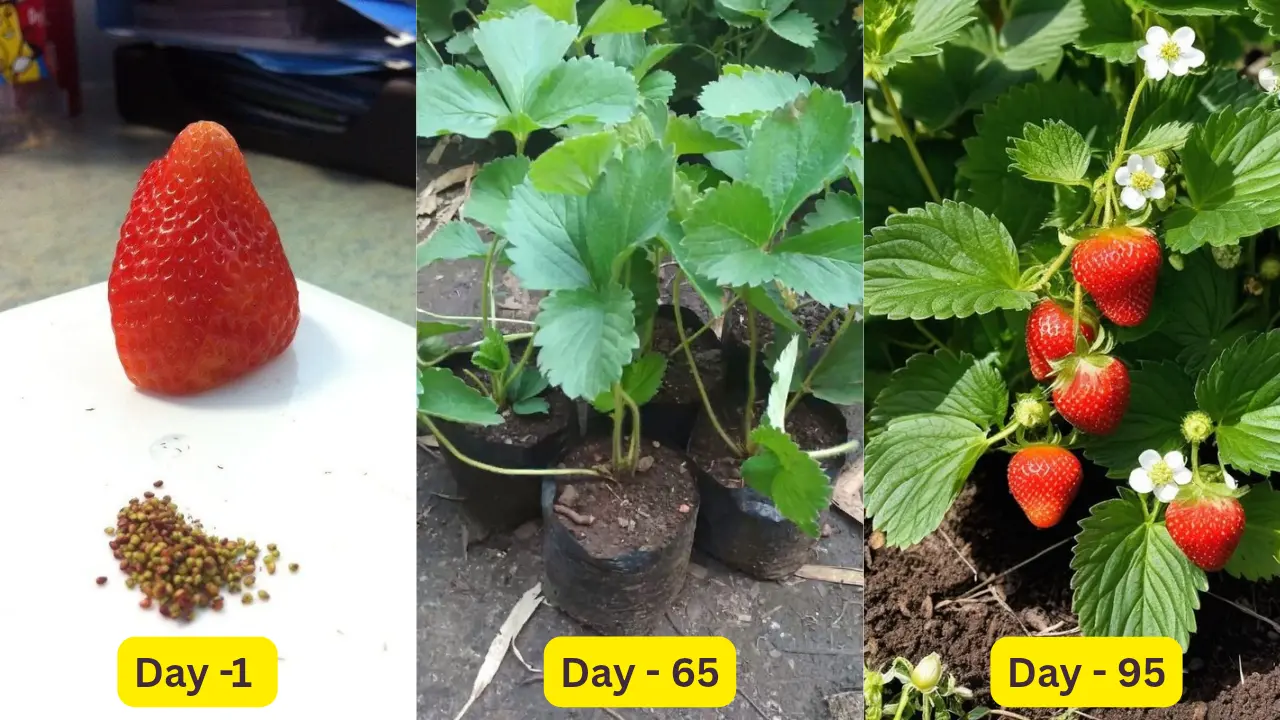
Growing strawberries from seed is one of the most rewarding gardening projects you can try at home. While many gardeners prefer planting runners, starting strawberries from seed allows you to grow unique varieties and enjoy watching the entire life cycle of the plant. If you are patient and provide the right growing conditions, strawberry seeds can develop into healthy plants that produce sweet, juicy berries.
I have grown strawberries from seed in containers and garden beds, and I learned that patience is the biggest secret to success. The seeds germinate slowly compared to many vegetables, but once the seedlings become established, they grow into productive plants with proper care. The steps below are based on practical experience and proven gardening methods that beginners can easily follow.
Table of Contents
About Strawberry Plant
| Feature | Details |
|---|---|
| Common Name | Strawberry |
| Botanical Name | Fragaria × ananassa |
| Plant Type | Perennial Fruit Plant |
| Sunlight | 6–8 Hours of Direct Sunlight |
| Soil | Loose, Fertile, Well-Draining Soil |
| Soil pH | 5.5–6.8 |
| Water Needs | Moderate |
| Germination Time | 2–6 Weeks |
| Harvest Time | 4–6 Months or Next Season (depending on variety) |
Grow Strawberries from Seed step by step guide
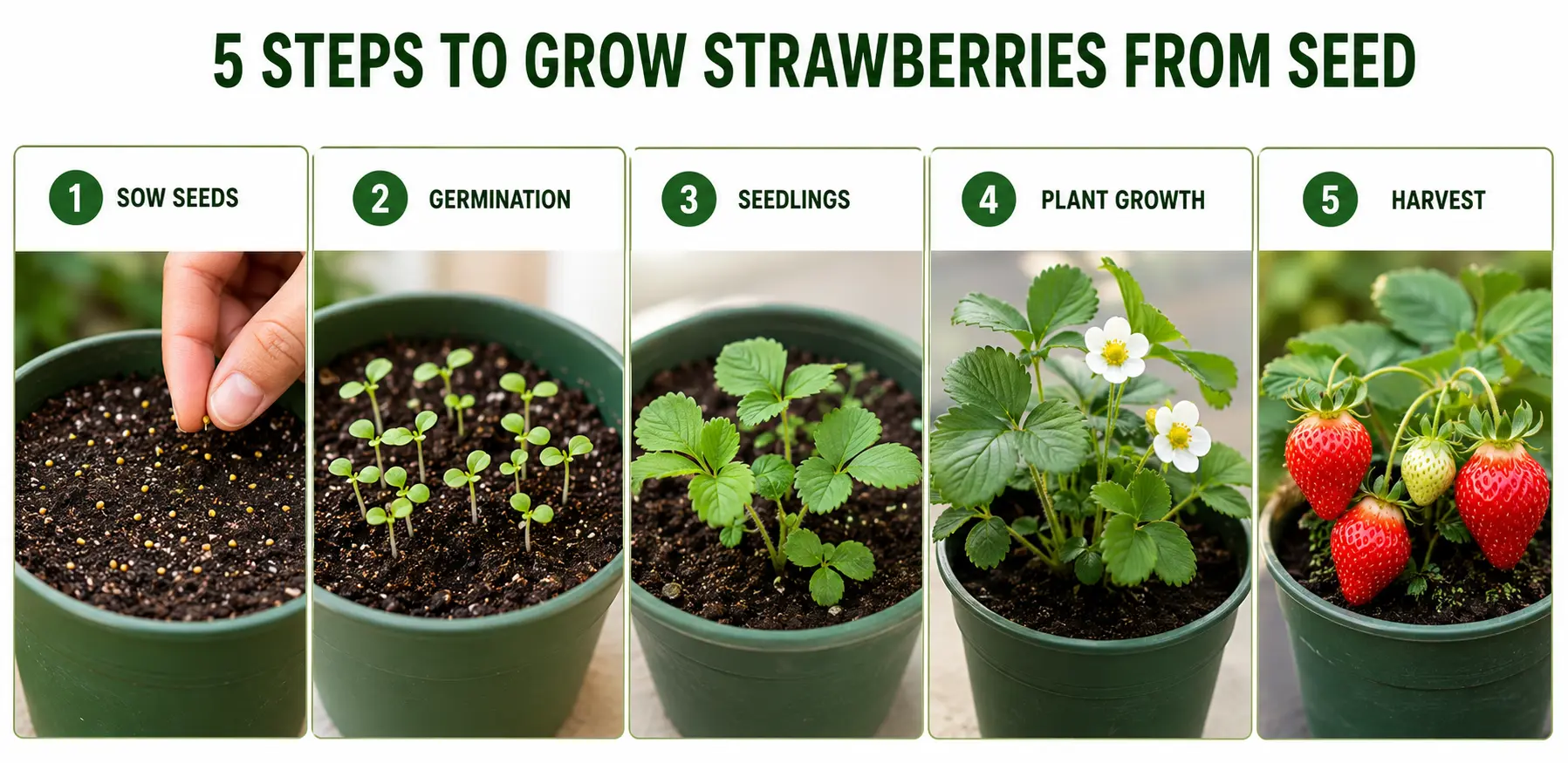
Step 1: Choose High-Quality Strawberry Seeds
The success of growing strawberries begins with good-quality seeds. Purchase seeds from a trusted nursery or reputable online supplier. Fresh seeds usually germinate better than old seeds.
Popular varieties for home gardeners include alpine strawberries, heirloom varieties, and everbearing strawberries.
Step 2: Cold Stratify the Seeds
Strawberry seeds naturally experience winter before they sprout. To mimic this process, place the seeds inside a sealed plastic bag and keep them in the refrigerator for 2–4 weeks.
This simple step often improves germination rates and helps seeds sprout more evenly.
Step 3: Prepare the Right Soil
Use a loose, well-draining seed-starting mix instead of heavy garden soil.
A good growing mix should:
- Drain excess water easily.
- Hold enough moisture for seedlings.
- Allow roots to breathe.
- Be free from weeds and diseases.
Fill a shallow seed tray or small pots with the prepared soil and water it lightly before sowing.
Step 4: Sow the Strawberry Seeds
Strawberry seeds are extremely tiny.
Scatter the seeds gently over the soil surface and lightly press them into the soil with your finger. Do not cover them with thick soil because they need light for successful germination.
Leave a little space between seeds to reduce overcrowding.
Step 5: Keep the Soil Moist
Consistent moisture is very important during germination.
Use a spray bottle to mist the soil whenever it begins to dry. Avoid pouring large amounts of water, as this can wash away the tiny seeds or cause fungal problems.
The soil should remain slightly moist but never soggy.
Step 6: Provide Warmth and Plenty of Light
Place the seed tray in a bright location where it receives indirect sunlight.
Ideal growing conditions include:
- Temperature between 18°C and 24°C.
- Bright windowsill or grow light.
- 12–16 hours of light daily.
Good lighting prevents weak, leggy seedlings and encourages healthy growth.
Step 7: Wait Patiently for Germination
Unlike many vegetables, strawberry seeds take time to sprout.
Most varieties germinate within 2–6 weeks, although some may take slightly longer.
During this period:
- Keep soil moist.
- Avoid disturbing the seeds.
- Ensure good airflow around the container.
Patience is essential because healthy seedlings are worth the wait.
Step 8: Transplant the Seedlings
When seedlings develop 2–3 true leaves, they are ready for transplanting.
Move each seedling carefully into an individual pot filled with nutrient-rich potting mix.
Handle seedlings gently by the leaves instead of the delicate stems to avoid damage.
Step 9: Give Strawberry Plants Enough Sunlight
Sunlight directly affects flowering and fruit production.
For the best harvest:
- Provide 6–8 hours of direct sunlight daily.
- Rotate container plants regularly if growing indoors.
- Protect plants from extreme afternoon heat in very hot climates.
Healthy sunlight exposure leads to sweeter strawberries and stronger plants.
Step 10: Water Properly
Strawberries prefer evenly moist soil.
Water deeply whenever the top inch of soil feels dry.
Avoid:
- Waterlogged soil.
- Standing water around roots.
- Wetting leaves late in the evening.
Morning watering helps plants stay healthy and reduces disease problems.
Best Fertilizer for Strawberries
Once seedlings begin active growth, feed them every 2–4 weeks with a balanced fertilizer.
You can also use:
- Compost
- Vermicompost
- Fish emulsion
- Organic fruit fertilizer
Avoid excessive nitrogen because it encourages leafy growth instead of fruit production.
Common Problems and Easy Solutions
Poor Germination
Usually caused by skipping cold stratification or allowing the soil to dry out.
Leggy Seedlings
Move plants to a brighter location or use grow lights.
Yellow Leaves
Often caused by overwatering or poor drainage.
Mold on Soil
Improve air circulation and avoid excessive watering.
Slow Growth
Feed plants with a balanced fertilizer and provide adequate sunlight.
When Will Strawberry Plants Produce Fruit?
Most strawberry plants grown from seed require several months before flowering.
Depending on the variety and growing conditions:
- Alpine strawberries may produce fruit in the first season.
- June-bearing varieties often produce their best crop the following year.
- Everbearing varieties may provide multiple harvests after becoming established.
Growing from seed requires patience, but the reward of harvesting homegrown strawberries is well worth the effort.
Conclusion
Growing strawberries from seed at home is an enjoyable gardening project for beginners and experienced gardeners alike. Although germination takes time, following the correct steps—cold stratification, proper soil preparation, consistent moisture, bright light, and regular care—can produce strong, healthy plants that reward you with delicious homegrown berries.
Read more post
