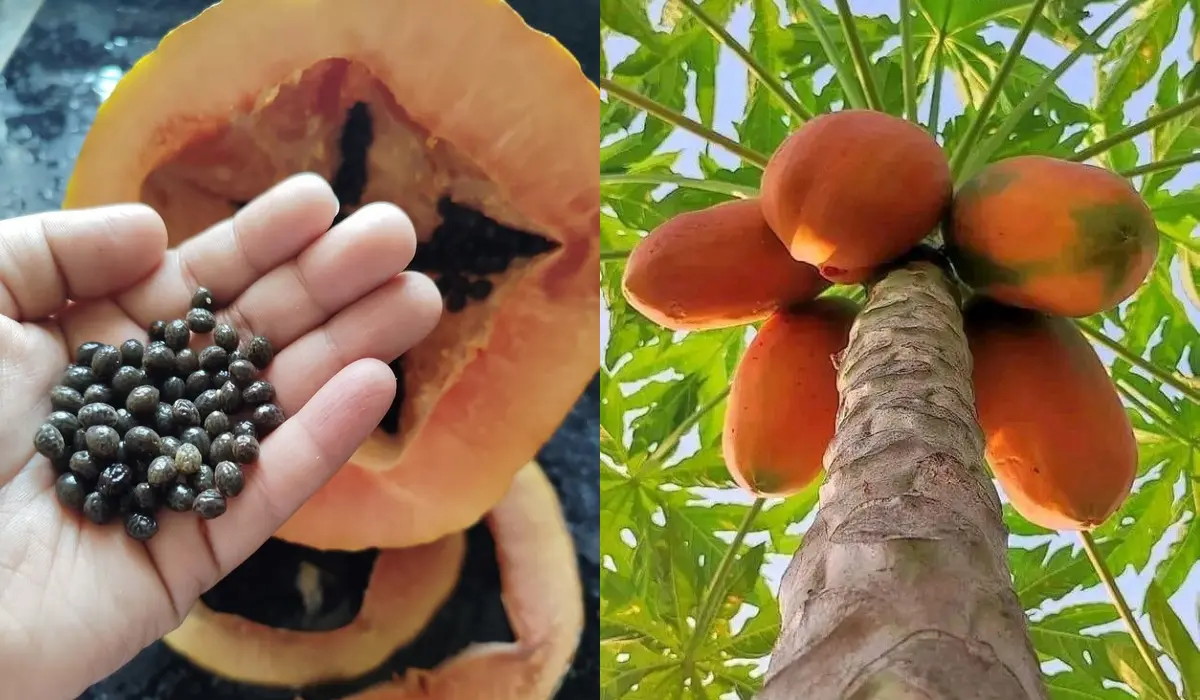
How to grow papaya from seed to fruit? Papaya is one of the easiest and fastest fruit plants to grow at home. With the right variety, proper soil, regular feeding, and good care, a papaya plant can start producing fruits within 8 to 12 months. In this guide, I am sharing my personal experience of growing papaya successfully from seed to harvest.
As someone who enjoys gardening and growing fruit plants, I have grown several papaya plants in my garden over the years. Through trial and experience, I learned which varieties perform best, how to prepare the soil, and what care helps papaya grow faster and healthier. In this article, I will explain everything step by step in simple language.
IN THIS ARTICLE
Best Papaya Variety to Grow
Choosing the right variety is the first step toward getting healthy plants and a good harvest.
Some of the best papaya varieties include:
- Red Lady 786 (Most popular and high-yielding)
- Taiwan Red Lady
- Pusa Delicious
- Pusa Nanha (Dwarf variety)
- Coorg Honey Dew
- Arka Surya
My first choice is Red Lady 786.
Why I recommend Red Lady 786:
- Fast-growing variety
- Produces fruits within 8-10 months
- Large sweet fruits
- High disease resistance
- Suitable for home gardens and farms
Find the Best Place for Growing Papaya
Location plays a major role in papaya growth.
Choose a spot that receives:
- 6 to 8 hours of direct sunlight daily
- Good air circulation
- Protection from strong winds
- Proper drainage
Avoid planting papaya:
- In heavy shade
- In waterlogged areas
- Near large trees that compete for nutrients
From my experience, papaya plants grown in full sun produce more flowers and fruits compared to those grown in partially shaded areas.
Papaya Seed Propagation Step by Step
Growing papaya from seed is simple and affordable.
Step 1: Select Healthy Seeds
- Choose seeds from a ripe and healthy papaya fruit.
- Wash the seeds thoroughly.
- Remove the gelatinous coating around them.
Step 2: Dry the Seeds
- Spread seeds on paper.
- Dry them in shade for 24-48 hours.
Step 3: Prepare Seed Tray or Pot
Use:
- Seed tray
- Small nursery pots
- Grow bags
Fill with light, well-draining soil.
Step 4: Sow the Seeds
- Sow seeds about 1 cm deep.
- Cover lightly with soil.
- Water gently.
Step 5: Maintain Moisture
Keep the soil slightly moist but not soggy.
Step 6: Germination
Seeds usually germinate within:
- 2 to 4 weeks
Step 7: Transplant Seedlings
When seedlings reach:
- 6-8 inches tall
- Have 4-6 true leaves
Transplant them carefully into their permanent location.
Choose the Best Soil for Papaya
Papaya grows best in fertile and well-draining soil.
Ideal soil characteristics:
- Loose texture
- Rich in organic matter
- Good drainage
- Slightly acidic to neutral pH (6.0-7.0)
Best Soil Mix
I use:
- 40% garden soil
- 30% compost
- 20% cocopeat
- 10% river sand
This mixture keeps roots healthy and prevents waterlogging.
Before planting, mix:
- Well-rotted cow manure
- Vermicompost
- Neem cake powder
This creates a nutrient-rich growing environment.
Best Feed for Fast Growing Papaya Plants
Papaya is a heavy feeder and responds very well to regular nutrition.
At Planting Time
Add:
- Compost
- Vermicompost
- Neem cake
During Vegetative Growth
Every 20-30 days apply:
- Vermicompost
- Cow manure
- Mustard cake liquid fertilizer
For Flowering and Fruiting
Use:
- Banana peel fertilizer
- Wood ash
- Bone meal
- Organic fruit booster
Nutrients Papaya Needs Most
- Nitrogen for leaf growth
- Phosphorus for root development
- Potassium for fruit production
In my garden, regular compost and vermicompost applications noticeably increase plant growth and fruit size.
Support for Papaya Plant
Papaya stems are soft and can break during strong winds or when loaded with fruits.
Provide support by:
- Installing a bamboo stake beside the plant
- Tying the stem loosely with soft garden ties
- Supporting heavy fruit-bearing branches if necessary
Support is especially important during the rainy season and windy weather.
Protect Papaya from Pests and Diseases
| Pest/Disease | Symptoms | Treatment |
|---|---|---|
| Aphids | Curled leaves, sticky honeydew, weak growth | Spray neem oil every 7-10 days and remove heavily infested leaves. |
| Mealybugs | White cotton-like insects on stems and leaves | Wipe with rubbing alcohol and apply neem oil spray. |
| Fruit Flies | Small holes in fruits, fruit rotting from inside | Use fruit fly traps and remove damaged fruits immediately |
| Powdery Mildew | White powdery coating on leaves | Improve air circulation and spray organic fungicide or neem oil. |
| Root Rot | Yellow leaves, wilting, soft roots | Avoid overwatering and ensure well-draining soil. |
| Papaya Ringspot Virus | Yellow mottled leaves, ring-shaped spots on fruits | Remove infected plants and control aphids that spread the virus. |
| Anthracnose | Dark sunken spots on fruits and leaves | Remove affected parts and use copper-based fungicide. |
Healthy plants are less likely to suffer from problem
After Care Tips
Once your papaya plant is established:
- Water deeply once or twice a week.
- Keep the area weed-free.
- Add compost every month.
- Mulch around the base.
- Remove damaged leaves regularly.
- Monitor for pests weekly.
- Maintain proper sunlight exposure.
- Support the stem when fruits become heavy.
These simple practices keep the plant productive and healthy for a long time.
Harvesting Papaya Fruits
Papaya fruits are ready to harvest when:
- Skin starts turning yellow
- Fruit size reaches its full development
- Fruit feels slightly soft
Harvesting steps:
- Use clean pruning shears.
- Cut the fruit carefully from the stem.
- Avoid pulling fruits by hand.
Most papaya fruits become fully ripe within a few days after harvesting.
From my experience, harvesting fruits when 25-50% of the skin turns yellow gives the best flavor and shelf life.
Conclusion
Growing papaya from seed to fruit is rewarding and surprisingly easy when you follow the right steps. Start with a quality variety like Red Lady 786, plant it in a sunny location, use well-draining soil, feed regularly with organic fertilizers, and provide support as it grows. Consistent watering, pest management, and monthly compost applications will help the plant stay healthy and productive.
In my gardening experience, papaya is one of the fastest fruit plants to reward your efforts. With proper care, you can enjoy fresh, sweet homegrown papayas within a year and harvest fruits for many months afterward.
How to Grow Tomatoes in Pots and Containers – My Personal Gardening Experience
