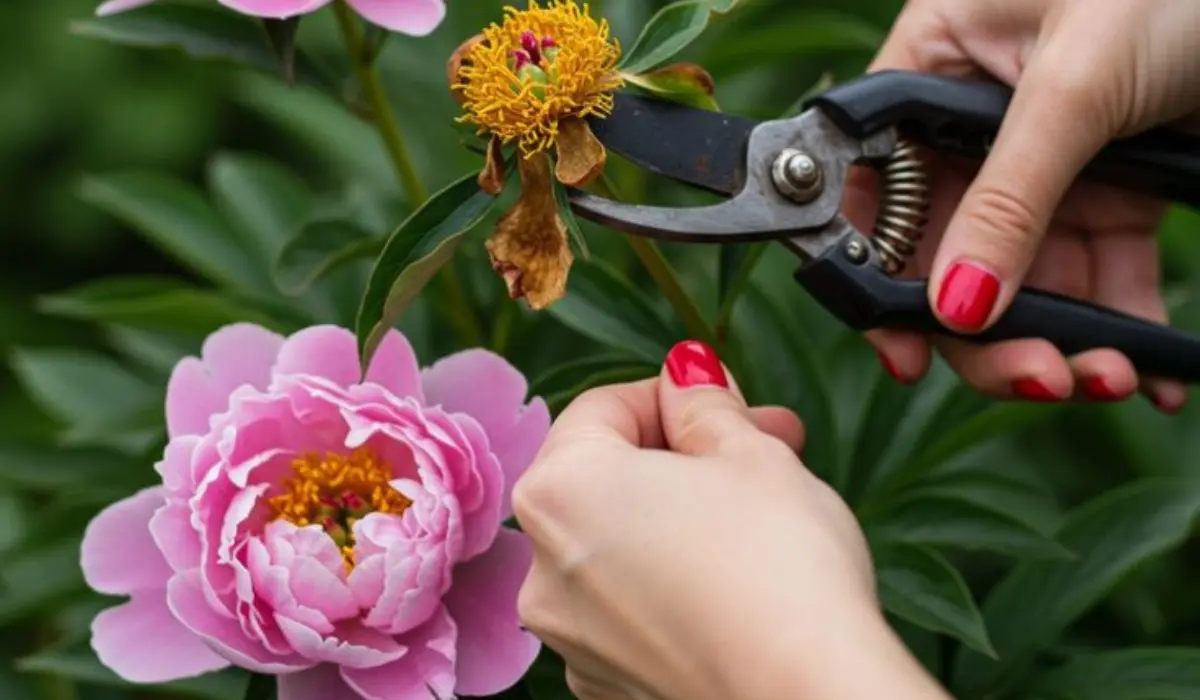
How to deadhead peonies and trim peonies after they bloom is one of the most common questions gardeners ask after enjoying the beautiful spring flowers. From my experience growing peonies, removing faded blooms at the right time helps the plant look neat, prevents unnecessary seed production, and allows it to focus energy on healthy roots and next year’s flowers.
I have been growing flowering plants in my garden for years, and peonies are among my favorites. Their large, colorful blooms make a garden look stunning. However, many gardeners are unsure what to do once the flowers fade. Through trial and error, I learned that proper deadheading and trimming can keep peonies healthy and improve their appearance throughout the season.
IN THIS ARTICLE
What Is Deadheading Peonies?
Deadheading means removing faded or spent flowers after they finish blooming. Once a peony flower starts turning brown and losing petals, it no longer adds beauty to the plant.
Removing these old flowers helps the plant:
- Look cleaner and more attractive
- Prevent seed formation
- Direct energy back into root growth
- Reduce the chance of fungal problems around decaying petals
In my garden, I always deadhead peonies as soon as the flowers start fading. The plants stay much tidier, and I notice healthier growth afterward.
When to Deadhead Peonies
The best time to deadhead peonies is immediately after the flowers begin to fade.
Look for signs such as:
- Petals dropping
- Flower color fading
- Brown or dry blooms
- Wilted flower heads
I usually inspect my peonies every few days during the blooming season. As soon as a bloom starts looking tired, I remove it.
Avoid waiting too long because old flowers can become messy and attract pests or diseases.
How to Deadhead Peonies Properly
Deadheading peonies is simple and only takes a few minutes.
Step 1: Use Clean Pruners
Always use clean and sharp pruning scissors or garden pruners. This helps prevent the spread of plant diseases.
Step 2: Follow the Flower Stem
Locate the faded flower and follow its stem downward until you reach the first healthy set of leaves.
Step 3: Make a Clean Cut
Cut just above the healthy leaf node.
Avoid leaving long bare stems because they can look unattractive and may die back.
Step 4: Remove Debris
Collect fallen petals and flower heads from around the plant.
Keeping the area clean reduces disease problems and improves airflow.
This method has worked well for me every year and keeps my peony plants looking fresh throughout summer.
Trimming Peonies After They Bloom
Many gardeners think they should cut the entire plant back after flowering. In my experience, this is a mistake.
After blooming, peony leaves continue producing energy through photosynthesis. The plant stores this energy in its roots for next year’s flowers.
What to Trim After Blooming
After flowering finishes:
- Remove spent blooms
- Cut damaged stems
- Remove diseased leaves
- Trim broken branches
Leave healthy green foliage intact.
The leaves may not be as exciting as the flowers, but they are extremely important for the plant’s future growth.
Should You Cut Peonies to the Ground After Blooming?
No, do not cut herbaceous peonies to the ground immediately after blooming.
I made this mistake once when I first started gardening. The following year, the plant produced fewer flowers because it had less time to store energy.
Instead, allow the foliage to remain until autumn.
The green leaves continue feeding the roots throughout summer and early fall.
When to Cut Back Peonies Completely
The best time for major pruning is in fall after the foliage turns yellow or brown.
Usually this happens:
- Late autumn
- After the first frost
- When leaves naturally die back
At this stage, the plant has already stored enough energy for next year’s growth.
How to Cut Back Peonies in Fall
- Wait until foliage turns yellow or brown.
- Use clean pruning shears.
- Cut stems down to about 1 to 2 inches above the soil.
- Remove all plant debris.
- Dispose of diseased leaves instead of composting them.
I follow this routine every year, and my peonies return strongly each spring.
Common Mistakes When Deadheading and Trimming Peonies
Cutting Healthy Foliage Too Early
This is probably the biggest mistake gardeners make.
Healthy leaves help produce next year’s flowers. Removing them early can weaken the plant.
Leaving Diseased Leaves on the Plant
If you notice black spots, mildew, or fungal issues, remove affected leaves promptly.
Using Dirty Pruning Tools
Dirty tools can spread diseases from one plant to another.
Always clean tools before and after pruning.
Ignoring Fallen Petals
Old petals can hold moisture and encourage fungal growth.
I always clean up around the base of the plant after deadheading.
Benefits of Deadheading Peonies
Over the years, I have noticed several benefits from regular deadheading.
Better Plant Appearance
The plant looks tidy and well-maintained.
Improved Air Circulation
Removing old blooms helps air move through the plant more easily.
Reduced Disease Risk
Decaying flowers can attract fungal problems.
Stronger Root Development
The plant can focus its energy on root growth instead of seed production.
Quick Tips for Deadheading Peonies
- Deadhead flowers as soon as they fade.
- Cut above a healthy leaf node.
- Keep green foliage until fall.
- Remove damaged or diseased leaves.
- Use clean, sharp pruning tools.
- Clean up fallen petals around the plant.
- Cut plants back completely only after foliage dies naturally.
FAQ for Deadhead Peonies
Do peonies bloom again after deadheading?
No, most peonies bloom only once each year. Deadheading will not produce another flush of flowers, but it helps the plant conserve energy for next season.
Can I trim peonies in summer?
Yes, you can remove spent flowers and damaged stems during summer. However, leave healthy foliage in place.
What happens if I don’t deadhead peonies?
The plant will still survive, but it may look untidy and spend energy producing seeds instead of strengthening its roots.
Should I fertilize peonies after blooming?
A light feeding after flowering can support root development. Avoid excessive nitrogen because it encourages leafy growth instead of flowers.
Conclusion
Knowing how to deadhead peonies and trim peonies after they bloom can make a big difference in the health and appearance of your plants. From my gardening experience, the best approach is simple: remove faded flowers, keep healthy leaves throughout the growing season, and wait until fall for major pruning. By following these steps, your peonies will remain strong, attractive, and ready to produce beautiful blooms again next year.
