Quick Guide: Air plants thrive in bright indirect light, weekly watering, good airflow, and moderate humidity. Let them dry completely after soaking to keep them healthy and prevent rot.
How to take care of an air plant is one of the most searched questions by beginner plant lovers. The answer is simple—air plants need bright indirect light, regular watering, good airflow, and the right humidity to stay healthy. Although they don’t grow in soil, they still need proper care to thrive and even produce beautiful flowers.
I have been growing different types of air plants for the past few years, and they have taught me that these unique plants are much easier to care for than most people think. Like many beginners, I once believed they could survive without watering because they are called “air plants.” After losing my first plant, I learned how they actually grow in nature. Since then, I have successfully grown several healthy Tillandsia plants indoors. In this guide, I’m sharing the same simple methods that work well in my home and garden.
What Is an Air Plant?
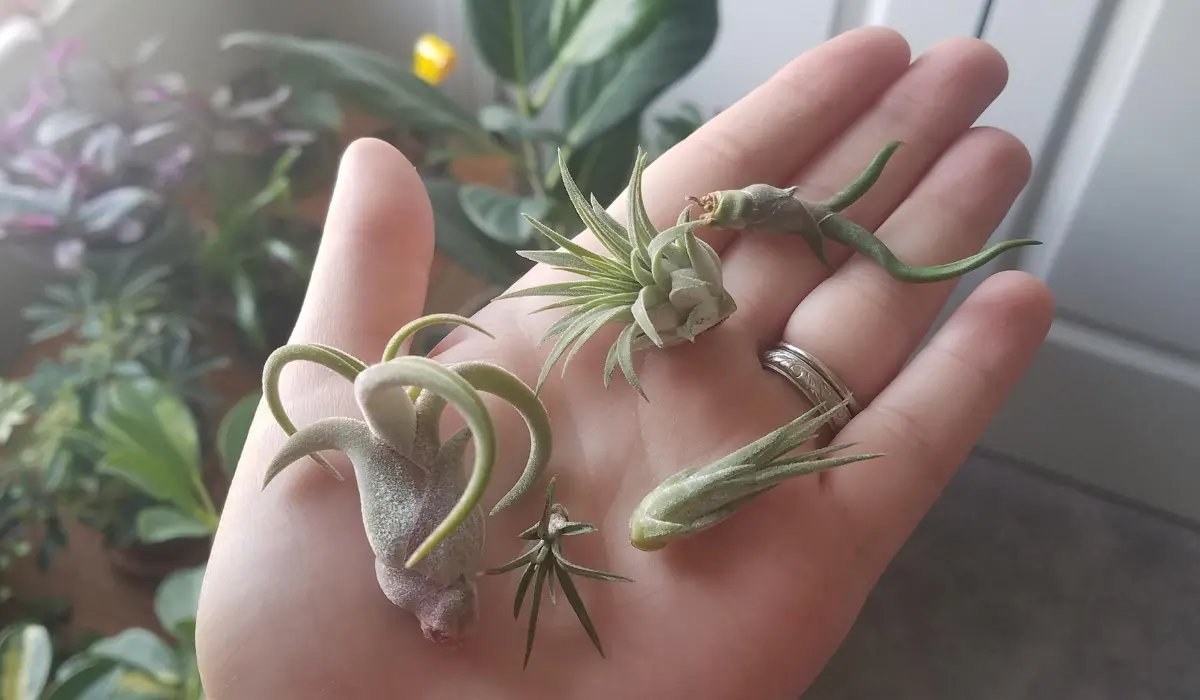
Air plants belong to the Tillandsia family, a group of epiphytic plants that naturally grow on tree branches, rocks, and fences instead of in soil. Their roots mainly help them attach to surfaces, while the leaves absorb moisture and nutrients from the air.
These plants are loved because they require very little space and look beautiful in homes, offices, balconies, and indoor gardens.
| Feature | Details |
|---|---|
| Common Name | Air Plant |
| Botanical Name | Tillandsia |
| Plant Type | Epiphyte |
| Soil Required | No |
| Light | Bright indirect sunlight |
| Watering | Soak once a week |
| Humidity | Medium to High |
| Best Location | Bright indoor space with airflow |
Why Air Plants Are So Popular
Air plants are one of the easiest indoor plants to maintain when their basic needs are met.
Reasons people love air plants:
- No soil is required.
- Perfect for small apartments.
- Beautiful modern home decoration.
- Beginner-friendly plant.
- Available in many unique shapes and sizes.
- Can produce attractive flowers.
- Easy to display in creative ways.
Best Light for Air Plants
Light is one of the biggest factors that determines whether an air plant stays healthy. I noticed my first air plant became pale because I kept it in a dark room. After moving it near a bright window with filtered sunlight, new healthy leaves started growing within a few weeks.
Air plants grow best in bright indirect sunlight. Morning sunlight is generally safe, but harsh afternoon sun can burn the leaves, especially during summer.
Light Care Tips
- Place near an east or north-facing window.
- Give 2–4 hours of bright indirect light daily.
- Avoid strong afternoon sunlight.
- Rotate the plant every few weeks for even growth.
- Use a grow light if your home is dark.
How to Water an Air Plant
Watering is where most beginners make mistakes. From my experience, soaking the plant works much better than only misting.
I usually soak my air plants in clean water for about 20–30 minutes once every week. During hot summer weather, I sometimes water them twice a week because they dry much faster.
After soaking, I gently shake off the extra water and place the plant upside down on a towel until it is completely dry. This simple habit has prevented almost all rot problems in my collection.
Watering Tips
- Soak for 20–30 minutes.
- Water once every week.
- Water twice weekly during very hot weather.
- Always dry the plant completely after watering.
- Never leave water trapped inside the center.
Humidity and Airflow
One lesson I learned from growing air plants is that airflow is just as important as watering. These plants naturally grow in open areas where fresh air constantly moves around them.
Without proper airflow, excess moisture stays inside the leaves and may lead to rot.
Humidity Tips
- Maintain moderate to high humidity.
- Keep the plant in a well-ventilated room.
- Mist occasionally during dry weather.
- Avoid closed containers with poor ventilation.
- Keep away from damp corners.
Best Temperature for Air Plants
Air plants enjoy temperatures that are comfortable for most people.
Extreme cold and extreme heat can damage the leaves and slow their growth.
Temperature Tips
- Ideal temperature: 15°C–30°C
- Protect from frost.
- Avoid placing near heaters.
- Keep away from direct AC airflow.
- Bring outdoor plants indoors during winter.
Do Air Plants Need Fertilizer?
Air plants can survive without fertilizer, but occasional feeding encourages faster growth and healthier flowering.
I usually feed mine once a month during spring and summer using a fertilizer specially made for air plants or bromeliads.
Fertilizer Tips
- Feed once every month.
- Use diluted fertilizer.
- Apply during spring and summer.
- Avoid overfeeding.
- Skip fertilizer during winter dormancy.
Best Places to Keep an Air Plant
One of my favorite things about air plants is their versatility. Since they don’t need soil, they can be displayed almost anywhere with enough light and airflow.
I have successfully grown them on driftwood, hanging holders, and open glass containers.
Display Ideas
- Wooden driftwood
- Hanging wire holders
- Open glass terrariums
- Decorative shells
- Wall-mounted frames
- Ceramic bowls
- Balcony shelves
- Bright office desks
Common Air Plant Problems
Even healthy air plants may show signs of stress if their growing conditions are not suitable. Fortunately, most problems are easy to fix.
| Problem | Cause | Solution |
|---|---|---|
| Brown leaf tips | Dry air or underwatering | Increase watering and humidity |
| Wrinkled leaves | Dehydration | Soak the plant for 30 minutes |
| Black center | Rot | Improve airflow and reduce standing water |
| Soft base | Excess moisture | Dry completely after watering |
| Slow growth | Low light | Move to a brighter location |
My Experience Growing Air Plants
Over the years, I have realized that air plants don’t require complicated care—they simply need consistency. The biggest mistake I made in the beginning was treating them as plants that needed no attention. Once I understood their natural habitat, caring for them became much easier.
Today, I always focus on four simple things: bright indirect light, proper soaking, complete drying, and good airflow. Since following this routine, my air plants have remained healthy throughout the year and continue to reward me with fresh growth.
If you are new to gardening, don’t be afraid to try an air plant. They are forgiving, beautiful, and an excellent choice for anyone wanting a unique indoor plant.
FAQ – How to Take Care of an Air Plant
Can air plants grow without soil?
Yes. Air plants naturally grow without soil and absorb moisture through their leaves.
How often should I water an air plant?
Generally once a week, but increase watering during hot and dry weather.
Can air plants stay indoors?
Yes. They grow very well indoors if they receive bright indirect sunlight and good airflow.
Why are my air plant leaves turning brown?
Brown tips usually indicate low humidity, underwatering, or too much direct sunlight.
Conclusion
Knowing how to take care of an air plant is easier than most people think. Give your plant bright indirect sunlight, weekly watering, proper airflow, moderate humidity, and occasional fertilizer, and it will reward you with healthy growth for years. Based on my personal experience, following these simple care tips has made air plants one of the easiest and most enjoyable houseplants in my collection. Whether you’re a beginner or an experienced gardener, an air plant is a wonderful addition to any indoor space.
You May Also Like
What Is a Parodia Cactus ? How to Grow It at Home
When to Plant Wildflower Seeds: My Experience for Beautiful Blooms All Year
