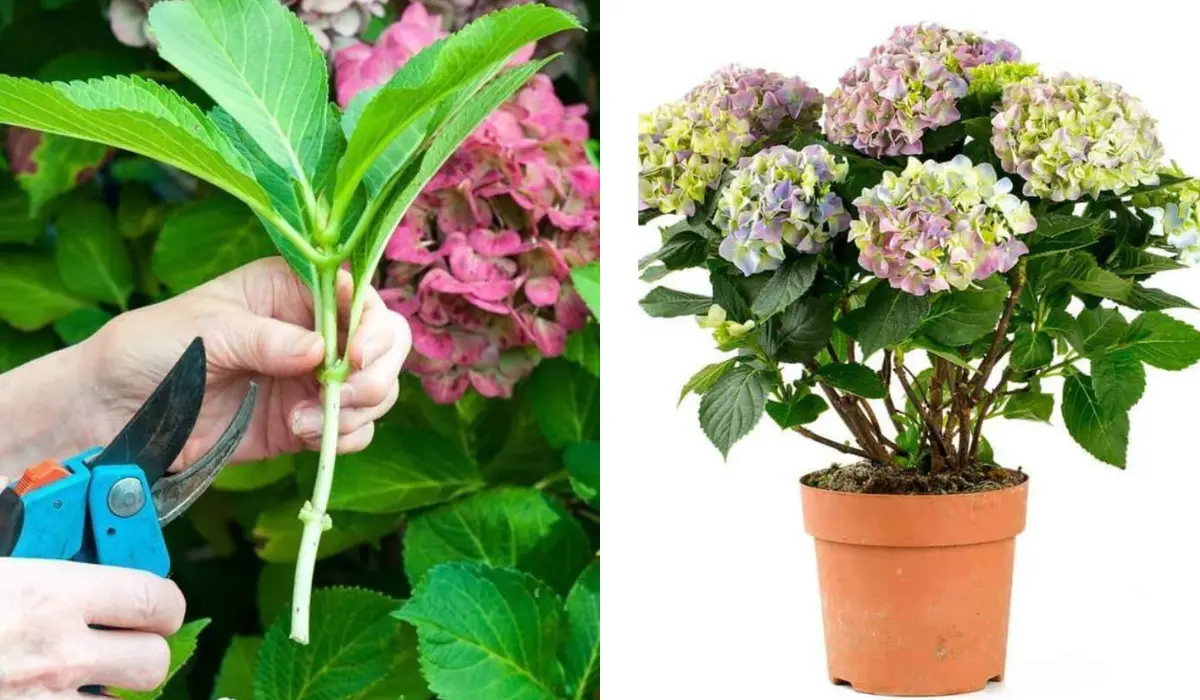
How to propagate hydrangeas from cuttings is a common question among gardeners who want to grow more hydrangea plants without spending money on new ones. The good news is that hydrangeas are one of the easiest flowering shrubs to propagate. With a healthy stem cutting, proper moisture, and a little patience, you can grow a brand-new hydrangea plant that is identical to the parent plant.
I have been growing and propagating plants for several years, and hydrangeas are among my favorite flowering shrubs to multiply from cuttings. In my experience, softwood cuttings taken during late spring and summer root much faster than older woody stems. By following the simple method shared below.
IN THIS ARTICLE
Hydrangea Propagation Methods
There are several ways to propagate hydrangeas:
- Stem cuttings
- Layering
- Division
- Seeds
- Root cuttings (for certain varieties)
Among all these methods, stem cuttings are considered the easiest and most reliable option for home gardeners.
Best Time to Propagate Hydrangeas From Cuttings
The best time to take fresh, green (softwood) cuttings is in late spring or summer.
During this period, the plant is actively growing, and stems contain enough energy to develop roots quickly. Softwood cuttings generally root faster than hardwood cuttings and have a higher success rate.
Avoid taking cuttings during winter because the plant is dormant and rooting can be slow and difficult.
Ideal Growing Conditions
Soil
Hydrangeas grow best in fertile, well-draining soil rich in organic matter. Good drainage is important because waterlogged soil can cause stem rot before roots develop.
Adding compost to the soil helps improve moisture retention while also supplying nutrients for healthy growth.
Sunlight
Most hydrangea varieties prefer bright light but not intense afternoon sun.
They generally perform best when they receive morning sunlight and afternoon shade. During the propagation stage, cuttings should be kept in bright indirect light because direct sunlight can dry them out quickly.
pH
Hydrangeas prefer slightly acidic to neutral soil.
The ideal soil pH range is between 5.5 and 6.8. In some hydrangea varieties, soil pH can even influence flower color. More acidic soil often produces blue flowers, while more alkaline conditions can result in pink blooms.
Space
Proper spacing is important for healthy growth and airflow.
Small hydrangea varieties typically need 3 to 4 feet of space, while larger varieties may require 6 to 10 feet between plants. Good spacing reduces disease problems and encourages stronger growth.
Easy 5-Step Hydrangea Propagation From Cuttings
Step 1: Select a Healthy Stem
The first step is choosing the right stem.
Look for a healthy stem that:
- Has fresh green growth
- Is free from pests and diseases
- Does not have flowers
- Measures approximately 4 to 6 inches long
Non-flowering stems generally root faster because the plant can focus its energy on root production instead of flower development.
Step 2: Take the Cutting
Using clean and sharp pruning shears, cut just below a leaf node.
Remove the lower leaves and keep only two or three leaves near the top of the cutting. This helps reduce moisture loss while allowing the cutting to continue photosynthesis.
Always use clean tools to reduce the risk of disease.
Step 3: Prepare the Cutting
Before planting, prepare the cutting properly.
Trim large leaves by cutting them in half if necessary. This reduces water loss while maintaining enough leaf surface for energy production.
You may also dip the cut end into rooting hormone. While this step is optional, it often improves rooting success and speeds up root development.
Step 4: Plant the Cutting
Fill a small pot with a well-draining propagation mix.
A mixture of peat moss and perlite works very well. Insert the cutting approximately 2 inches deep into the growing medium.
Water the soil lightly and cover the pot with a clear plastic bag or humidity dome. High humidity helps prevent the cutting from drying out before roots develop.
Make sure the plastic cover does not touch the leaves.
Step 5: Wait for Root Development
Place the cutting in a warm location with bright indirect light.
Maintain temperatures between 18°C and 24°C (65°F to 75°F). Keep the soil consistently moist but not soggy.
Most hydrangea cuttings develop roots within 2 to 4 weeks, although some varieties may take slightly longer.
A gentle tug on the cutting can help determine whether roots have formed. If you feel resistance, rooting has likely begun.
Caring for Newly Rooted Hydrangea Cuttings
After roots develop, the young plant will need proper care to continue growing successfully.
Gradually remove the humidity cover over several days so the plant can adapt to normal air conditions. Continue providing bright indirect light and keep the soil evenly moist.
Avoid placing young plants in harsh direct sunlight immediately after rooting. Once new growth appears, the cutting can be transplanted into a larger container or planted outdoors if weather conditions are suitable.
Common Mistakes to Avoid
Many propagation failures occur because of a few common mistakes.
- Using flowering stems
- Overwatering the soil
- Allowing the cutting to dry out
- Keeping cuttings in direct sunlight
- Using heavy garden soil
- Removing humidity protection too early
Avoiding these mistakes can greatly increase your chances of success.
Benefits of Propagating Hydrangeas From Cuttings
Growing hydrangeas from cuttings offers several advantages.
- Free new plants
- Maintains the same flower color and characteristics
- Faster than growing from seed
- High success rate
- Ideal for expanding garden beds
- Easy for beginners
For gardeners who love hydrangeas, propagation is an excellent way to create multiple plants from a single healthy shrub.
FAQ – Propagate Hydrangeas From Cuttings
How long does it take for hydrangea cuttings to root?
Most hydrangea cuttings develop roots within 2 to 4 weeks when provided with proper warmth, humidity, and moisture.
Can hydrangeas be propagated in water?
Yes, hydrangeas can be propagated in water, but soil propagation generally produces stronger roots and healthier plants.
Do hydrangea cuttings need rooting hormone?
Rooting hormone is optional. Many hydrangea cuttings root successfully without it, although it can improve success rates.
Can I propagate hydrangeas during winter?
Winter is not recommended because hydrangeas are dormant. Late spring and summer are the best times for propagation.
Can one cutting become a full hydrangea plant?
Yes. With proper care, a single rooted cutting can grow into a mature hydrangea shrub and produce flowers in future growing seasons.
Conclusion
Learning how to propagate hydrangeas from cuttings is a simple and rewarding gardening skill. By taking healthy softwood cuttings during late spring or summer and providing proper moisture, humidity, and indirect light, you can successfully grow new hydrangea plants at home. In my gardening experience, this method consistently produces strong and healthy plants with a high success rate. With patience and proper care, a single cutting can eventually become a beautiful flowering hydrangea shrub that enhances your garden for years to come.
How to Propagate Lilacs From Cuttings: A Beginner-Friendly Step-by-Step Guide
